Podcast episode profile for 21. Look at you, hacker!
Hackers are mythical creatures that just get in everywhere. Hacking is alas used as ersatz magic in many games and Hollywood movies. DJ Daemon tires of this and tries to find some games and movies that does this in a reasonly correct way. He uses a very generous definition of “correct”. But the suspence of disbelief is a strong force of nature. So let's just accept this as a proper hacker story.
ericade.radio knows the chiptune and demoscene! We're the radio station playing all the best tunes from the most prominent, promising or trending artists in the scene. We also know about the artists and songs as well.
This profile was last updated on: 2026-09-29 02:00:06
🎙 Curated by DJ Daemon
View all episodes

🎙 About the podcast
Flashback, tracks from the past
We have covered the demo scene since 2020, and play all the great chip tune music as well. Join us to hear tracked music combined with commentary from the geek-of-all-trades: DJ Daemon. He was once known as Daemon in the Amigaworld, and brings you stories about Amiga, retrocomputing, C64, demos, the demo scene and all things nerdy in the retro world.
We play tracker music composed on Protracker, Screamtracker, Fasttracker and Impulsetracker. It's music composed on Amiga and the retro-PC. Genres such as Chiptune, Synthwave and Retro electro.
Track Details
- MD5
af2bb961691dc21d4309cfffd458763a- SHA-1
926f2e3e03d85b6ebdade75a5e681fd741f9205a- SHA-256
be41071ce97470c381b21d5f37ff76c6b34b947b52328f86d6ab6925f2ade00d- SHA-384
918a43b9a1bc7cf1dd7fb20a78b3e5442e2765d483c466bc9b1be271bd8b5078bba4fa5abec98327c0d9545cc4c04a1d
🎤 Production Notes
I put some effort into writing the dialogue for this episode as I felt the prewritten episodes were more enjoyable as I could control how long I spoke and avoid "word searching" and mistakes. It was also one of the first episodes to feature speech from the games themselves.Colophone:"Look at you, hacker" is the first line from Shodan's infamous speech "Look at you, hacker: a pathetic creature of meat and bone, panting and sweating as you run through my corridors. How can you challenge a perfect, immortal machine?". That speech is even in the intro of the show. When I review the hacking tropes I use names of real hackers and hacker groups. Like "I give it 9 out of 10 Fancy bears".
Transcript
Amiga Flashback 21 – Show intro
You are listening to the Ericade Radio Network. Time for another episode of Amiga Flashback, the show that takes you back to the 80s and 90s. Look at you, hacker. A pathetic creature of meat and bone, hunting and sweating as you run through my corridors. How can you challenge a perfect, immortal machine?Hacking in games is the subject of today's show. It doesn't matter if it's just a minor plot, or the whole story is about hacking. If it's hacking, and if it's retro, it will be considered. So ladies and gentlemen, please start your command lines.
Reptile – Peaceful journey
I hack stuff for money. Yep, that's right, I'm a pen tester. So I actually do have a clue on how it's done. But this does not matter today. We're all about computer games and hacking right now. Fictational hacking can be stupid. Or actually fairly plausible. If it's the latter, I am willing to include the game in today's show. So all games here are at least not totally out there when it comes to telling you how it's done.But I have taken huge liberties with what I consider plausible because it's a story and it's a game. In order to run this podcast hacking simulation you will need to install suspension of disbelief version 18.17 or later. In short the stories told here are so compelling within reason of course that even huge flaws in how hacking is done can be accepted as the correct way to do it.Yeah, yes accepted I guess.
Amiga Flashback 21 – About todays show
KB and Reflex – Beyond The Gates
Hacker is a graphic adventure. It was made by Activision and released in 1986. It's made to have you thrown in without a clue of what's happening or what to do. According to C64vicky.com, this is most of the manual for the game. Other computer games often have lengthy instructions to explain how the game is played. Hacker is not like other computer games.We have told you how to load the program. Everything else is up to you. A real life hacker would proceed by trial and error. And that is how you play this game. The only tip we'll give you is this. Don't play hacker like a standard adventure. You will get further, faster if you just try things out instead of trying to decide what the next most logical step would be. So start hacking.As soon as you get into the Magma corporate network, a piece of really cool hardware is yours to command. It's a robot that can go through underground tunnels to different places in the world. This robot can now assemble information from spies that believe that you're representing the corporation. And then you get a whole document of illegal activities that you hand over to a governmental agent.So the verdict? I love that the game forces you to experiment, but it's mostly hacker style in spirit. It's mostly a mix of technical savvy and social engineering, but it truly has the right feeling to it. I give it 6 out of 10 Mitnicks. Well, when all is said and done, relax, sit down in your chair, and it's Miller time.
Amiga Flashback 21 – Game – Hacker (C64, 1986)
Amiga – Charism of dark
The next game up is Uplink, released in 2001 for the PC. First, a shout out to Coreos from Retro Spirit, that's Retro.gg for suggesting this one. Yeah, as I said, it was released in 2001 and I have of course played it, so it's a perfect choice for this episode. Alright, I have played all the games I'm talking about here.You are an agent of the kind that takes various jobs, that could be hacking a network that the buyers want you to because it's their enemies. It could include sabotage, stealing data, leaking information, framing people irregardless of the guilt, or why not laundering money. The interface is very well done and it looks like, how should I say this, an overly Hollywood-esqueKali Linux. Yeah I know, Kali did not exist back then, but it's a very nicely represented graphical interface if I say so. The whole thing loses a bit of realism by being, you know, so graphic. Many hacking tools in reality are text based and runs typing in a console. Maybe it's hacker style a light as well.You really need to build up your reputation to get some serious moolah. But the fact that you have to learn how to cover your tracks, by itself that's amazing. This makes it feel so much more real. The IP addresses are fake, they can often look like 666.666. You know, it's like a Klondike 555 of IP address. So sweet, that is a game to love and cherish.So the verdict? It's feeling near to perfect. You see, it balances out the idea of making a career and actually doing the dirty work. I will give it 9 out of 10 fancy beers.
Amiga Flashback 21 – Game – Uplink (PC, 2001)
Linus Hagne – Uplink
Amiga Flashback 21 – Xerxes – the Windows ME of AIs
Okay, yeah, well. Talk about a dark foreshadowing.Because of course it gets hacked. Xerxes is the artificial intelligence that answers the question. If the last AI we built went on a murderous rampage, wouldn't it be better if we made the next one dumb as a brick? System Shock 2, yeah, that's a game we have spoken about earlier, you know, in the Good Games Bad Endings episode of this podcast. So no more about that.But the AI getting hacked made the whole attack against the von Braun go from a bad defense situation to a total success for the intruders. You see, root access is not something you want Shodan's mad experiments to have on your ship. Dumb AI means defenseless AI, so there. The game itself has a very cyberpunk approach to hacking as a skill, but it's not very well done.So I will not delve into this. So okay, the verdict. The hacking trope of System Shock is not very believable, but then again, a game that has telekinesis as its main skill is hard to really see in that way. It's a great game, but the hack feeling not so good. However, the plot device of Xerxes being a total Windows ME security device, that is something I like.It gets 4 out of 10 gibsons.
Drax – Zarathustra
Sir, sir, the robots are revolting! Yeah, I know, they totally are. A little bit of work on their aesthetics could've fixed that, but there we are. You are a human brain connected to some sort of device that Hack 5 could've fought up in an alternate future. It's primitive, but certainly very and extremely useful.When you enter the ship with the robots that now kill humans on sight, you're underpowered and without any access to things. But a good hacker wouldn't want to have it any other way. The robots have numbers between 100 to 999. The higher number, the better robot. As soon as you can, you must hijack a robot and hack it. Doing so starts a mini-game with you and the robot on opposite sides of the screen.where you connect cables in a way that get power over to the robot side. Or maybe it's hackish data, what do I know? The robot has its own cables, the higher number the more cables. The one that gets more power over to the other side wins. If you lose, the robot you control burns out. And if you don't control the robot, it's game over. If you win, then you pwn the robot. It's now yours to control.It wants robots when controlled, cut through anything, but you can only control them for a limited time. So you jump between defense droids, maintenance drones and... drink trays on wheels. I'm not kidding here. This game is hard for real, but the Amiga version was for some reason much easier. The verdict? Well, it's hacking in a way that one day may actually become realistic.That will be a weird time. Tough, but a very nice game. Replayability is so-so. It gets 7 out of 10 calcis.
Amiga Flashback 21 – Paradroid (C64) and Paradroid 1990 (Amiga)
Lizardking – Hackerrence mania
DJ Daemon talks about Hollywood movies showing hacking in a realistic way
of the games are not the only ways you can talk about hacking. Hollywood has a history of really bad portraying of hackers in movies, but sometimes they get it right. I have a podcast called IT säkerhetspodden. It's about IT security and in there I actually talk about in one episode about when Hollywood actually did it right and free games comes.to mind. The first one is War Games, the other one is Matrix Reloaded and the third one with its penny shaving magic that would be Office Space. So yeah, Hollywood can do it right and they can do it wrong as well.
Keo – Hacking on heavens door
DJ Daemon wonders about the last song
to joke about this, don't we? It's of course knocking on heaven's door. I hope I don't get a cease and desist letter for this one. I think it's a parody so it should probably fall under some kind of, what do you say, fair use or something. It's fun. Don't take it so literally.
Baal of manitou – Songs of a dragon
DJ Daemons talks about the movie WarGames
think about it I would say that war games the movie we're talking about is basically a computer game in itself it has a number of computer games in it if you think about it when the hacker actually uses a dialer a war dialer to call this NORAD computer he has offered five different games if I remember correctly and the top one and the most popular is thermonuclear warAnd that is not a good idea to play because someone may actually believe it's for real. Yeah, that's a great movie by the way. So maybe it's not just about games. Sometimes movies can be nice portraying hackers. And I would say WarGames is kind of accurate as well because they use a real war dialer as I said. It sounds a little bit like you later on used Tone Lock for this purpose in real life. You know...calling and dialing and dialing until you get a computer responding with a modem on the other side.
The Soul Stealer – Hacker's Dream
DJ Daemon doesn't like Matrix Revolutions, but respects its use of NMap.
And another movie, I'm listing those that I had on the podcast and on the IT security podcast It's a matrix reloaded. It's not a good movie It's a really bad one if you ask me But they do portray nmap a real program being used in a way that is close to correct But it's fun to see it because I have seen it so many times in real life So yeah, if it's good enough for Neo and Trinity, it's good enough for you
Xemogasa / ske – Sapphire eyes
DJ Daemon grapples with penny shaving (who's Penny anyway?) and salami slicing. Sounds awful but it's actually about money fraud. It feels better now.
have to admit that I'm not really good with this kind of, you know, financial crimes investigations. So it's a little bit out of my remit. But you know, Office Space, they actually do a real thing called penny shaving. And they do other stuff, salami slicing it's called. Basically they take the roundings of the sons and they're kind of depositing on their own accounts. This is a real attack really, but I wouldn't recommend it. Banks are...kinda good at spotting this.
Nighthawk / pfs – Do the monkey!
DJ Daemon thanks you for listening and signs off
weird ending of a song. Anyway, this is DJ Daemon thanking you for listening to Amiga Flashback, the 21st episode. Lucky 21 I guess. Well, next Saturday a new podcast as per usual. Thanks for listening.
Singer/altair+grns+mnt – Seen an angel
🏷 Retro gaming
Flashback episodes covering classic and retro video games, from the 8-bit era onward.
Play History
- 🕘 2026-09-27 06:00:07
- 🕘 2026-09-22 03:00:08
- 🕘 2026-09-16 15:00:08
About the artist Amiga Flashback View all tracks ›
Started in december 2020, Amiga Flashback was the first name of "Flashback, tracks from the past". It features nice midnight DJ banter from DJ Daemon, interviews, discussions about retro-stuff and lots of tracked music. Most of it is Amiga tracked tunes. In May 2021, it was renamed and started allowing all kinds of tracked tunes instead of mostly Amiga ones.
🎧 8,469 plays on ericade.radio
🎙 People in this podcast episode
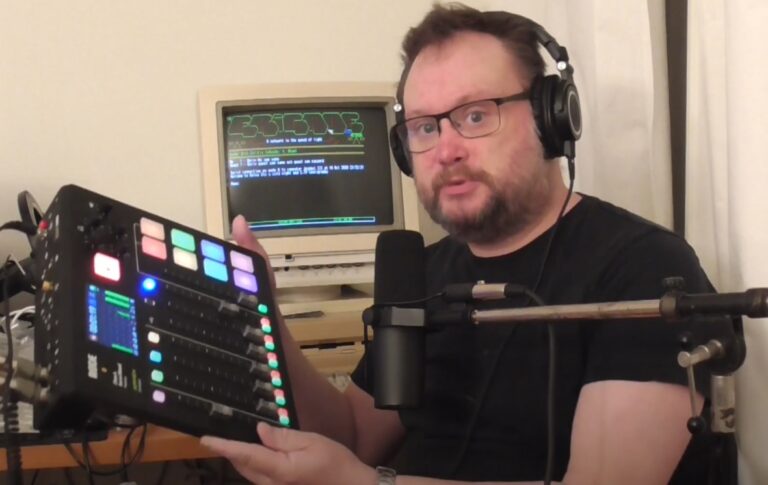
He got his Commodore 64 in 1989 and his first Amiga in 1990. A huge fan of tracker music and have had a long standing dream to create a radio show playing that kind of music. In 2020, that dream came true and in december Amiga Flashback started as a podcast. It was later renamed Flashback, tracks from the past and here we are.
He is also an orga for Swedish demo party Edison and a total retro nerd.
📡 Podcast details
Mp3 file details
 Open the waveform at full size (opens in a new tab)
- Scan status Whether the station’s analyser could read this mp3. “OK” means every number in this box was measured from the actual audio, not copied from a tag that somebody typed.
- OK
- measured from the file itself
- Scanned When the file was last analysed. If the mp3 is replaced afterwards, these numbers describe the old version until it is scanned again.
- File size How much room the mp3 takes on a disk, and how much data you use when you play or download it. It is roughly the bit rate multiplied by the length.
- 82.6 MB
- 86 612 661 bytes
- File last changed When the mp3 on our server was last written - usually the day it was uploaded, or encoded again.
- Length How long the recording plays. It is measured from the audio itself, so it is right even when a tag in the file says something else.
- 59:59
- minutes : seconds
- Bit rate How much data is spent on each second of sound. More data keeps more detail when the audio is squeezed into an mp3: 128 kbit/s is acceptable, 192 is good, and 320 is the most an mp3 can hold.
- 193 kbit/s
- good quality
- Sample rate Digital audio is a long row of measurements of the sound wave. This is how many are taken every second. 44.1 kHz is the CD standard and 48 kHz the video and broadcast standard - both capture everything a human ear can hear.
- 44.1 kHz
- 44 100 measurements a second
- Channels How many separate signals the file holds. Mono is one. Stereo is two - left and right - which is what lets a sound be placed somewhere between your speakers.
- Stereo
- 2 channels
- Codec The method used to shrink the audio. MP3 leaves out the detail an ear is least likely to miss, which makes the file about a tenth of the size of the original recording.
- MP3
- Loudness The average loudness of the whole recording, the way a listener hears it (“integrated loudness”, in LUFS). The closer to 0, the louder. Music services aim for about -14 and podcasts for about -16, so that you do not have to reach for the volume between tracks.
- −12.1 LUFS
- on the loud side
- Loudness range The distance between the quiet passages and the loud ones, in LU (1 LU is 1 dB). A small number means an even, compressed sound - good in a car or on a phone. A large number means big swings between soft and loud.
- 3.8 LU
- very even
- True peak The highest level the signal ever reaches, including the peaks that appear between the measurements when the file is turned back into sound. 0 is the ceiling: above about -1 dBTP, a recording can crackle (“clip”) on some players.
- 1.8 dBTP
- close to the ceiling - may distort on some players
- Dynamic range How far the loudest peaks stand above the loud parts of the recording, in dB - the “DR” number that music collectors compare albums by. A low number (under 8) means the sound has been squeezed until everything is equally loud: punchy, but tiring to listen to. 14 and up means the music has room to breathe, with real hits and real quiet. It says nothing about how loud the file is: turning the volume down does not change it. Chip music made of steady square waves naturally lands low.
- DR 10
- 10.1 dB · moderately dynamic
- Left channel level The average strength of the left channel over the whole recording (“RMS”), counted in dB below the loudest level a digital file can hold (dBFS). More negative means quieter. Compare it with the right channel.
- −14.4 dBFS
- average (RMS) over the whole file
- Right channel level The average strength of the right channel over the whole recording (“RMS”), counted in dB below the loudest level a digital file can hold (dBFS). More negative means quieter. Compare it with the left channel.
- −14.1 dBFS
- average (RMS) over the whole file
- Channel balance The left level minus the right level. Close to 0 dB means both sides are equally loud. More than about 1 dB and the whole mix leans towards one ear.
- 0.29 dB
- balanced
- Stereo width How strong the part that DIFFERS between left and right is, compared with the part they share. A very low number (-40 dB or less) means both sides carry the same sound - mono in practice. A higher number means a wider stereo picture; a very high one can sound thin on a single speaker.
- −9.0 dB
- ordinary stereo
- Cover art in the file Whether a picture is stored inside the mp3 itself. A player shows it as the album art when the file is played somewhere else - in a car, on a phone, offline.
- Yes
ID3 tags Text stored inside the mp3 file itself - title, artist, album and so on. It is what a music player, a phone or a car stereo shows while it plays the file, and it travels with the file wherever it is copied.
Measured from the mp3 file on our server by the station’s own analyser. Point at a label, or select its question mark, for what the number means.
📻 Station details
The home of retro computing and retro gaming music. Streaming 24/7 with shows and podcasts about retro computing, retro gaming, demo scene and all things nerdy in the retro world.
Comments