Podcast episode profile for 24. Meet Mr. Brimble
Allister Brimble composed a lot of the most famous Amiga-tracks in the early 90s and was frequently contracted by Team17. DJ Daemon has licensed the 2014 remixes of the old songs and plays them here for you and also talks a little about the games themselves.
ericade.radio knows the chiptune and demoscene! We're the radio station playing all the best tunes from the most prominent, promising or trending artists in the scene. We also know about the artists and songs as well.
This profile was last updated on: 2026-10-26 16:00:07
🎙 Curated by DJ Daemon
View all episodes
🎙 About the podcast
Flashback, tracks from the past
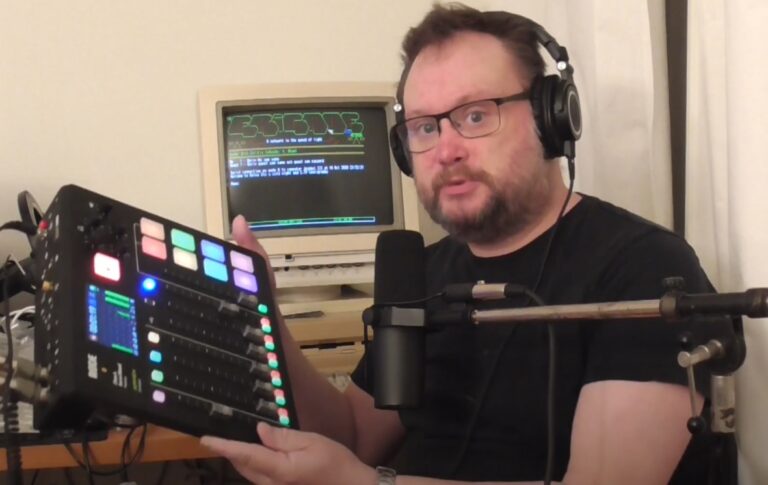
We have covered the demo scene since 2020, and play all the great chip tune music as well. Join us to hear tracked music combined with commentary from the geek-of-all-trades: DJ Daemon. He was once known as Daemon in the Amigaworld, and brings you stories about Amiga, retrocomputing, C64, demos, the demo scene and all things nerdy in the retro world.
We play tracker music composed on Protracker, Screamtracker, Fasttracker and Impulsetracker. It's music composed on Amiga and the retro-PC. Genres such as Chiptune, Synthwave and Retro electro.
Track Details
- MD5
2d9e4ae7d09b74cf70d57bbaf5a820f8- SHA-1
b4effd508ce05fb17eb19df62897836bcde731e7- SHA-256
11d961df8a308be518fd11ebc166da1139af0668cd8242d37395f20516e81f60- SHA-384
7d454ff4e486de4edfc2cd16730eef49fc8a20ab890bc16215a57cc60d8c90c5c15814aa99fd59661fca58c3385608f1
🎤 Production Notes
Colophon: The title is inspired by an old English schoolbook I read in elementary school. It was called "Meet Mr. Mooney".
Transcript
Amiga Flashback – show intro
You are listening to the Ericade Radio Network. Time for another episode of Amiga Flashback, the show that takes you back to the 80s and 90s. Today we're celebrating the genius of Alistair Brembo. He was one of the most prolific artists on the Amiga scene during the early 90s and has composed music for a number of really high profile games.But we're not gonna play the original game music. No, in 2014 he created a remix of his best songs. And that's what you're gonna hear today.
DJ Daemon talks about the song.
Allister Brimble – Superfrog Title
DJ Daemon talks about the song.
Okay, you must know this. It's actually Super Frog, a game released in 1993 by Team17. And yes, he composed the music for it. It's a very fun and very addictive platformer where you play a frog who is really a prince that got, you know, he ran into one of those witches and that never ends up well for anyone. So here he is trying to save himself and find his girlfriend. You know.a standard fair theme there, but a really really nice game.
Allister Brimble – Project X Old Timer (Chris Huelsbeck remix)
DJ Daemon talks about the song.
Most of the games that we play music from today were released by Team17, yeah, you know, the Swedish game developer studio. And it seems like LSD Brimble was a staple in their games and nothing more than Project X. Yep, we heard a special version of Project X here called Project X Old Timer, which was a remix together with Chris Julesbeck. And what is Project X done? Well, that is actually a...white a game, can say it's a horizontally scrolling shooter. You know, have a spaceship and you shoot stuff and it's kinda asteroid sometimes. It was published in 1992 and yeah, did quite well as far as I know.
Allister Brimble – Overdrive
DJ Daemon talks about the song.
Overdrive music composed by Alistair Brembo, but you know, that's all we play today It was released by team 17, of course in 1993 and it's a top-down racing game Think a little bit like micro machines for the Commodore 64 and you control buggies and sports cars and whatever and you race around a track Yeah, pretty standard, but the music yeah, that is something special
Allister Brimble – Sexy Robot
DJ Daemon talks about the song.
Yeah, this one had me guessing. Most of the games I know exactly what they were, and many of them I played. But Sexy Robot, yeah, that's the name of the song. Is that even a game? Turns out no, no, no, no, it's not a game, and it's definitely not something pornographic or erotic. It's actually a cover disc from the news.paper, the magazine called Amiga Format, and it was released in their AF number 3 cover disc in 1989. Well, it's simply this song and a robot that does not look particularly sexy, it's just a robot, more like a cool robot, and that's what it was.
Allister Brimble – Spellbound Dizzy
DJ Daemon talks about the song.
Spellbound Dizzy. Yep, that's a name of a game that also is known as Dizzy 5. It's an adventure video game and also kind of more like a platformer with some story elements into it. And it features the character Dizzy, which is kind of, I don't know, an egg with legs and hands. Released in November 1991 by Codemasters. So this is not a Team 17 one. Yep, it's kind of a cute game if you ask me.
Allister Brimble – Zeewolf
DJ Daemon talks about the song.
That was Sea Wolf, released in November 1994 by Binary Asylum. It's a single player 3D shoot em up. It's a helicopter game where you see the helicopter from behind and you have a landscape that you fly over and kinda bomb the crap out with your missiles and stuff. It's very simple graphics but seems to be captivating actually.
Allister Brimble – Trodders Title
DJ Daemon talks about the song.
One of the most famous games for Amiga was of course Lemmings. And this is Trothers. The Trothers intro is what you just heard. And Trothers was kinda, I don't know if I wanna go as far as to say it was a rip-off of Lemmings, but it's kinda built on the same idea. And it was released in 1992 by a game developer known as Atod.It had a number of missions and you had to solve the problems on time, pretty much the same way as Lemmings works, but it had other kind of rules for it. And it got decent ratings as far as I know.
Allister Brimble – Alien Breed
What's coming up now is a message on the screen. Insert disc 2. Okay, okay, gonna see if I can find one here. I have a USB stick, is that okay? Can I, can I rip out the hard drive and put it back in? I don't know. Anyway, that was Alien Breed and you must know this one. It's probably one of the most famous songs and themes and games that he was ever involved in, so to speak.The first Alien Breed came out in 1991 and the latest one is from 2010. So yeah, there has been a few of these, but the one from 91 plays like some kind of scene out of Aliens, know, James Cameron's master movie. You can see yourself from the top down and you shoot at aliens at an alarming rate here where they just pop in from pretty much everywhere. And the music, yeah, it matches the game perfect.
DJ Daemon talks about the song.
Allister Brimble – Assassin
DJ Daemon talks about the song.
SSM, published in 1992 by, you guessed it, Team17. It's a rather modern platformer. Think Impossible Mission 3. Yeah, it got high ratings and the music, yeah, it matches the theme where you try to climb and crawl and hang on to a world that tries to kill you.
Allister Brimble – Superfrog Space
DJ Daemon talks about the song.
It's still Super Frog, but it's the Super Frog last level that is in space, because space. I like saying that. So anyway, we're going on with some more music, but time is running out and I can recommend if you like Alistair Brimble's stuff, go to Bandcamp and search for him. That's where I got the music. You can find a lot of good stuff.
Allister Brimble – Body Blows Galactic
DJ Daemon talks about the song.
music from Body Blows. Team17 of course, and it's a street fighter like game, came out in 1993. Raid reviews in mags such as CU Amiga, The One and Amiga Power and later became an AGA version. We're going out with a really happy note. Alistair Brimble, the Amiga never dies.
Allister Brimble – The Amiga Never Dies
Play History
- 🕘 2026-10-18 10:00:08
- 🕘 2026-10-09 13:00:06
- 🕘 2026-10-04 22:00:07
About the artist Amiga Flashback View all tracks ›
Started in december 2020, Amiga Flashback was the first name of "Flashback, tracks from the past". It features nice midnight DJ banter from DJ Daemon, interviews, discussions about retro-stuff and lots of tracked music. Most of it is Amiga tracked tunes. In May 2021, it was renamed and started allowing all kinds of tracked tunes instead of mostly Amiga ones.
🎧 8,552 plays on ericade.radio
🎙 People in this podcast episode

He got his Commodore 64 in 1989 and his first Amiga in 1990. A huge fan of tracker music and have had a long standing dream to create a radio show playing that kind of music. In 2020, that dream came true and in december Amiga Flashback started as a podcast. It was later renamed Flashback, tracks from the past and here we are.
He is also an orga for Swedish demo party Edison and a total retro nerd.
📡 Podcast details
Mp3 file details
 Open the waveform at full size (opens in a new tab)
- Scan status Whether the station’s analyser could read this mp3. “OK” means every number in this box was measured from the actual audio, not copied from a tag that somebody typed.
- OK
- measured from the file itself
- Scanned When the file was last analysed. If the mp3 is replaced afterwards, these numbers describe the old version until it is scanned again.
- File size How much room the mp3 takes on a disk, and how much data you use when you play or download it. It is roughly the bit rate multiplied by the length.
- 82.6 MB
- 86 588 209 bytes
- File last changed When the mp3 on our server was last written - usually the day it was uploaded, or encoded again.
- Length How long the recording plays. It is measured from the audio itself, so it is right even when a tag in the file says something else.
- 59:58
- minutes : seconds
- Bit rate How much data is spent on each second of sound. More data keeps more detail when the audio is squeezed into an mp3: 128 kbit/s is acceptable, 192 is good, and 320 is the most an mp3 can hold.
- 193 kbit/s
- good quality
- Sample rate Digital audio is a long row of measurements of the sound wave. This is how many are taken every second. 44.1 kHz is the CD standard and 48 kHz the video and broadcast standard - both capture everything a human ear can hear.
- 44.1 kHz
- 44 100 measurements a second
- Channels How many separate signals the file holds. Mono is one. Stereo is two - left and right - which is what lets a sound be placed somewhere between your speakers.
- Stereo
- 2 channels
- Codec The method used to shrink the audio. MP3 leaves out the detail an ear is least likely to miss, which makes the file about a tenth of the size of the original recording.
- MP3
- Loudness The average loudness of the whole recording, the way a listener hears it (“integrated loudness”, in LUFS). The closer to 0, the louder. Music services aim for about -14 and podcasts for about -16, so that you do not have to reach for the volume between tracks.
- −12.4 LUFS
- on the loud side
- Loudness range The distance between the quiet passages and the loud ones, in LU (1 LU is 1 dB). A small number means an even, compressed sound - good in a car or on a phone. A large number means big swings between soft and loud.
- 4.4 LU
- very even
- True peak The highest level the signal ever reaches, including the peaks that appear between the measurements when the file is turned back into sound. 0 is the ceiling: above about -1 dBTP, a recording can crackle (“clip”) on some players.
- 1.4 dBTP
- close to the ceiling - may distort on some players
- Dynamic range How far the loudest peaks stand above the loud parts of the recording, in dB - the “DR” number that music collectors compare albums by. A low number (under 8) means the sound has been squeezed until everything is equally loud: punchy, but tiring to listen to. 14 and up means the music has room to breathe, with real hits and real quiet. It says nothing about how loud the file is: turning the volume down does not change it. Chip music made of steady square waves naturally lands low.
- DR 11
- 10.8 dB · moderately dynamic
- Left channel level The average strength of the left channel over the whole recording (“RMS”), counted in dB below the loudest level a digital file can hold (dBFS). More negative means quieter. Compare it with the right channel.
- −14.7 dBFS
- average (RMS) over the whole file
- Right channel level The average strength of the right channel over the whole recording (“RMS”), counted in dB below the loudest level a digital file can hold (dBFS). More negative means quieter. Compare it with the left channel.
- −14.7 dBFS
- average (RMS) over the whole file
- Channel balance The left level minus the right level. Close to 0 dB means both sides are equally loud. More than about 1 dB and the whole mix leans towards one ear.
- 0.02 dB
- balanced
- Stereo width How strong the part that DIFFERS between left and right is, compared with the part they share. A very low number (-40 dB or less) means both sides carry the same sound - mono in practice. A higher number means a wider stereo picture; a very high one can sound thin on a single speaker.
- −5.4 dB
- very wide
- Cover art in the file Whether a picture is stored inside the mp3 itself. A player shows it as the album art when the file is played somewhere else - in a car, on a phone, offline.
- Yes
ID3 tags Text stored inside the mp3 file itself - title, artist, album and so on. It is what a music player, a phone or a car stereo shows while it plays the file, and it travels with the file wherever it is copied.
Measured from the mp3 file on our server by the station’s own analyser. Point at a label, or select its question mark, for what the number means.
📻 Station details
Amiga demo tunes, chiptunes and dreamy synth pieces from ProTracker, FastTracker 2, Impulse Tracker and the trackers that came after. Streaming around the clock, with live broadcasts from the demoparties. Made by sceners, for the demoscene.
Comments