Podcast episode profile for 170. Demozoo with Gasman: preserving demoscene history
Demozoo is in the center of the demo scene, making sure all productions are catalogued, stored and documented. Today, DJ Daemon meets Gasman - the leader of Demozoo who also co-founded it. They talk about the history, present and future of Demozoo and the demo scene itself. And also discuss what it means when artificial intelligence has taken over, why its a challenge to make sure the data is correct and if Demozoo can become the demoscene's Spotify.
ericade.radio knows the chiptune and demoscene! We're the radio station playing all the best tunes from the most prominent, promising or trending artists in the scene. We also know about the artists and songs as well.
This profile was last updated on: 2026-11-01 11:11:05
🎙 Curated by DJ Daemon
View all episodes
🎙 About the podcast
Flashback, tracks from the past
We have covered the demo scene since 2020, and play all the great chip tune music as well. Join us to hear tracked music combined with commentary from the geek-of-all-trades: DJ Daemon. He was once known as Daemon in the Amigaworld, and brings you stories about Amiga, retrocomputing, C64, demos, the demo scene and all things nerdy in the retro world.
We play tracker music composed on Protracker, Screamtracker, Fasttracker and Impulsetracker. It's music composed on Amiga and the retro-PC. Genres such as Chiptune, Synthwave and Retro electro.
Track Details
🎤 Production Notes
Recorded this interview on the 25th of October 2026 over Riverside with Gasman talking from his home in Great Britain.
Transcript
Flashback, tracks from the past - this time with a scener interview
Time for Flashback, Tracks from the Past. Today, with a scener interview.
DJ Daemon speaks with Gasman about the history, present and future of DemoZoo.
They say the internet does not forget, but it sure does. Many sceners have done their part to preserve and document the scene, but few efforts are as important as that of the site Demozoo. Today on Flashback, Tracks from the Past, we have a guest who is the leader and co-founder of Demozoo. Welcome, Gasman.
Thank you. Thanks for having me.
The autumn parties and the newcomers keeping the scene lively.
Before we get started, just a quick question. The demoparties of the autumn are in full swing. Would you say the demoscene is delivering?
Yeah, it's been a great summer of parties. There's been some really good releases. And it's especially been great to see so many newcomers. It's not just all the same sort of old faces year after year. There's still new people entering and discovering platforms that were around from before they were born. And yeah, there's been some great stuff going on.
Yeah, that's very nice. Would you say there are younger people coming in, filling the gaps?
Yeah, I think so. Just thinking of groups like Otomata Labs, and teadrinker, who's been around for a couple of years now, just bringing in new ideas, new ways of thinking about things. I don't know if it's remaining exactly the same size as before, but I think there's definitely enough activity to keep things going and keep everything lively. And I think that's all we really want.
Gasman on 300+ prods, the Spectrum, the TIC-80 and We Are The 8-Bits.
Yeah, that's great. You have created a lot of prods yourself over the years, over 300 if I understand it right. Can you tell me a little bit about your work and your prods?
Yeah. So traditionally I've always been working on the Spectrum. I grew up with that, and that was kind of my natural thing to go into. And,
so I suppose more recently I've been getting into the TIC-80, the fantasy consoles, and I really appreciate the sort of immediacy of being able to try stuff out. I suppose one of the common themes throughout all my productions has been wanting to take it as: okay, these are the resources I've got, what else can I do with that? So like browser demos back when you could only do 2D graphics, it was: okay, how can I twist this into 3D? And then once I've proved the concept, other people can run with it. And I suppose also I've been getting a bit of a following for sort of music and song-themed demos, in the future. And yeah, We Are The 8-Bits. So I think that's probably got quite an identifiable style by now.
Yeah, I understand. That is cool. It's been quite a while and many, many prods, 300. I think that's pretty amazing.
Yeah, I don't think I've looked at that number, but,
yeah, it's kind of scary.
From Demotopia to Demozoo: how the site was born.
Yeah, yeah. Okay, so Demozoo then. You are the co-founder and now the leader of the site. Can you tell me a bit about how it got started? You know, the story of the launch, and what is the connection with Demotopia?
Right, yeah. So Demotopia is really where it started. That was when I first got onto the internet and discovered that the sum total of all the Spectrum demos that were online at that time was actually smaller than the personal collection that I had on disk. We had World of Spectrum, which was the big archive for Spectrum software in general, and that had a few hundred demos. But just from the disks that I'd picked up from mail swapping, and from ordering a disk a month from the local public domain library, I had a few thousand. So I thought, okay, this can be my contribution to the internet. So I started digitizing these things and uploading them. At first it was just a static web page, but then as things grew, I started using a proper database for it. But at this point this was all Spectrum stuff only. And
it got to a point where it was a bit unmaintainable for one person. So even though I had a
web-based data entry system for that, it was really only something I could use myself, because it needed the internalized knowledge. Like if you had a demo by the group CPU, I'd just have to...
Mm-hmm.
okay, their real name is actually CyberPunks Unity, so you needed to look it up under that name. So it's not really something that
other people could just pick up without that existing knowledge. That got me thinking about how I could
rewrite this so that it's available for a wider audience of maintainers. And if I'm doing that, why not make it for the entire scene? Because obviously we have things like Pouet, but that just covers the demos specifically, rather than the wider graphics and music. And also,
because people are only adding the specific demos that they're interested in, there'll be gaps where things didn't have downloads. So just something that would give the complete picture of all the data that's out there. And so I...
I think there were a couple of false starts of trying to work on this. I think one or two of them briefly made it online. But it was really when Menace got in touch, wanting to do similar things. I think he's always been very much into the archiving side, and he suggested working together. So that's really what was the catalyst for getting Demozoo as we know it today. And he recruited all kinds of other people, especially on the data entry side. And it just
grew faster than I anticipated. And it was definitely a good few years in the dark before we decided, okay, this is ready, this is feature complete, we can actually launch this. And that was probably close to, I don't know, 10,
15 years, definitely more than 10 years ago. And then it's been great to see the demoscene really pick it up and run with it.
It is kind of an institution by now, isn't it?
Yeah. I'm happy it's found a place in the scene's culture rather than just documenting it.
Why the demoscene must be archived.
Yeah. So the question, of course, is: why must we archive and track the demoscene?
I think it's just been something I've instinctively thought: okay, we've got all of this software out here, it needs to be preserved. It's part of our history. And you mentioned UNESCO; I think that's the recognition of that fact in the wider world. But it's always been something I've thought, since having these boxes of disks at home: this stuff needs to be preserved. There's information about the collaborations between people, and friendships being formed, and it does have relevance to the wider world. These are groups that have gone on to create
video games that have taken the world by storm. And
yeah. So I think it's just
something that's not well known by the rest of the world, so it's up to us to really keep our history of it.
Demozoo as the Wikipedia or IMDb of the scene.
Yeah, that sounds perfectly fine. I see it the same way, actually. So would you say that you sometimes think of Demozoo as the scene's equivalent of the Internet Archive, or maybe Wikipedia?
Yeah, I think it's fallen into that sort of role. When we were building it, we didn't really have any
expectations of where it would fit. I think there's always been a desire of not just being the Wikipedia or IMDb, but also being something that can introduce new people into the scene, and be some sort of community. But I think part of it has been driven by the sort of people that got on board early, who were very much into the archiving, digging deep into the old cracktros and BBStros and diskmags, finding the connections and getting all this data online for the first time. So I think it's naturally fallen into that niche as a sort of Wikipedia or IMDb kind of
role.
The biggest impact: settling arguments, the Meteoriks and In Memoriam.
Yeah, I totally get that. Demozoo has been around for as long as I can remember. What would you say has been its biggest impact on the scene?
Hmm. I suppose just having something around to settle arguments and things has been the main role. There have been some pretty high-profile things, like the Meteoriks, helping out a lot with that, like collecting the list of candidates, and also helping out with the obituaries, the In Memoriam section. That's something that's very important to us. But...
I think the real impact is probably the million things that we just
don't really encounter as the site administrators. Actually,
this is probably one from back in the Demotopia days. But I remember there was one new demo that came out from someone who had been inactive for a while, and in the scrolling message they said, "Okay, after I'd made my first demo and put that out, I thought that this would be one of the last demos on the Spectrum. But now I've come back and found there's like thousands of scenes that are alive and kicking. So that's inspired me to come back." And I think that's...
if you get one story like that, then it's been a success. But hopefully it's getting people to discover: okay, this thing still exists, and okay, this is what the people I worked with then are up to now. And hopefully getting more people back into the scene.
How Gasman found the demoscene through Your Sinclair.
Yeah, yeah. But somehow you got started. So the question is, how did you get into the demoscene in the first place?
So I grew up with the Spectrum, as I said. I was really young when I first got that, like four or five years old, I think. And
I got into programming quite early on. I wasn't that much into the gaming. And
I guess I've always had this sort of personality, wanting to stick at things once I've got into a routine. Like when I buy a phone, I'll use it until it's disintegrating. And it's definitely been that way for the Spectrum. When we got to like 1992, '93, and the actual commercial life of the Spectrum was drying up, I was still buying Your Sinclair magazine every month and seeing what was still going on. And one of the few active things on the Spectrum at that point was the demoscene. They started covering that. And I was immediately enamored by that. It was: okay, this is the sort of thing I'm into. I can just explore the programming side of things for the joy of it, and keep in touch with this community. So I just got into making my own demos. I think the first one was entirely in BASIC, and then just slowly...
Thank you.
...increasing my skill set, and it's just been a part of my life ever since then.
Why the whole database is published as an open dump.
Ah, that is a fantastic story, really. Well,
Demozoo has a pretty unique take on open sourcing the data. You publish it as a nightly database dump to the public. It contains all the data from the site. I know some other sites, like Pouet, do this as well. Why have you chosen this path?
I've always just had this feeling that the data doesn't really belong to us as a site. It belongs to the scene more widely. To a large extent, it's been built up by the people coming in from across the scene, and so it always felt like something that we're building together, and it just didn't make sense to put it inside a walled garden.
Mm-hmm, mm-hmm.
And we've had people building all kinds of things on the back of that. I think Gargaj has come up with maps of demoscene activity and demoparties, and there have been various initiatives, like the Meteoriks, where having that data available has been a good thing. So I'm definitely happy to help out with these sorts of initiatives when we can, and having the data available is one way of doing that.
What stays private: passwords, real names and data protection.
Yeah, I think that is a very, very commendable way of doing it, to be honest. Pretty obviously you don't dump the passwords and stuff like that.
No. So it's a redacted version of the data. Things like passwords, and I think a few bits and pieces like... well, real names, we don't have... Well, when we put real names on the site... For a time, we had kind of private real-name data, where it was useful for us to track and find links, but then that had data protection concerns, and we thought, yeah, it's...
Yeah.
...it's probably better, more transparent, if we just don't have that.
Yeah.
So now we have kind of an internal field saying, okay, this is where we got this information, with the public disclosure of this. So there are bits and pieces like that that are internal only, but we try to keep that to a minimum.
Mm-hmm.
Try to
make as much available as it makes sense to.
Yeah.
Missing credits and how the community fills the gaps.
Another thought here: the importance of metadata can't be overstated, but far from all productions of the scene have proper documentation. I notice how tracker music modules have little to no data about who originally wrote them. How do Demozoo and its community make sure that the data that can be found gets added to the database?
Well, I suppose one thing that we always try to do is make it possible to have incomplete records. We don't require downloads to exist.
So things can be added as and when they get discovered. If there's
an anonymous track that later gets identified, then that can be added later. I think this is really where we're relying on the combined expertise of the demoscene. You have people who can just
listen to a track and go, "Oh, it's that one," and just have this encyclopedic knowledge.
Mm-hmm.
So yeah, it's just having access to
the combined specialist knowledge of everyone, really. I think that's the key to it.
Fix me beautiful, the Discord and the admin-only actions.
It's a community effort, so to speak. Talking about that, we have the "Fix me beautiful" forum thread on Demozoo. It seems to be a great way to fix omissions and errors in the library. Is that the main source of corrections?
Well, between that and the Demozoo Discord, I think that's where a lot of the additions and corrections come in. Obviously we hope that in most cases... well, because it's designed to be wiki-style, people are able to handle things themselves. There are certain things, like deletions and anything that means permanent data loss, like deleting screenshots, and also editing notes; those are things that are only accessible to the admins. But hopefully most things that people want to do are things that they can edit themselves. And we're always happy to jump in and do any sorts of fixes that people need.
Yeah, I've seen that. Menace seems to be very, very skilled at fixing those things, because in a lot of prods I've seen his name all over the place. He fixes everything.
Yeah, I think... well, we have a few admin tools for things like when a new party uploads things to scene.org, and we can
quickly match up the download links to entries. But there is definitely also a lot of manual work, and it does amaze me how much commitment people have to maintaining the data.
Link rot, scene.org and the end of untergrund.net.
Yeah, pretty awesome. Then we have the obvious problem with what we call link rot: links that suddenly lead nowhere, as the sites may no longer exist. How do you deal with that? Do you have some kind of automated way of finding them?
Yeah, so that's
kind of slightly outside of Demozoo's scope, because we don't host the downloads ourselves. So
well, I suppose that is where the problem arises, really. We are reliant on the other services. Well,
a large focus of the effort is on making sure that as much as possible gets added to scene.org.
Mm-hmm.
Also initiatives like Cesar, who I think has mostly been active on the Pouet side, making sure that whenever things get posted, he'll mirror them. And I think we've seen recently with untergrund.net, it finally seems to be going down, after being trailed for a long time. So it's definitely really helpful to have people being aware of
those risks and staying on top of them.
Mm-hmm.
Why it is called Demozoo, and modelling very human data.
Here's a question I just came up with. I don't know why I didn't think of asking you before, but Demozoo, what's in the name? What's the idea? Why is it called Demozoo?
I can't remember. I think it was just a process of brainstorming things with "demo" in them. Just something that was kind of catchy, and
I suppose it gave this sense of stuff that needs to be classified and organized. Like herding cats, I suppose you'd call it.
Yeah, I know. I know.
Actually, that is something that has always been interesting in building things: the fact that we're trying to organize something that is very,
very human and fuzzy. If there's something where you think, okay, this is a rule it follows, there will always be exceptions, like Robby Zariq being submitted to hundreds of parties, or people coming up with a new nickname for every release. So it's having to come up with ways to model those sorts of very human behaviors in what has to be a very rigid, data-driven way.
Music playback, the Mod Archive and emulators in the browser.
Okay. Yeah, but that's interesting. In 2014, you wanted music that could be played directly on the site. Is that still on the agenda? And how would you go about realizing that on the site? How would you make it work? Could Demozoo become the new Spotify of the demoscene?
Yeah. Well, we do have that to some extent. A lot of the music, if it's in MOD or MP3 formats, we do have the player on the site. There are some
limitations, because we don't,
as a rule, host the files ourselves, so there are browser-based limitations on where it can pull from. We need particular headers to be sent, so it's only certain sites. The Mod Archive is one that cooperates with that, so we can play things directly as downloads from the Mod Archive and scene.org. And when we have
other random sites hosting music, then we do have to mirror it ourselves to make sure that things are playable. So we do have those sorts of mechanisms in place. It's always something that can be improved. A lot of these mirroring tasks, I don't have them set up to run continuously, because there are all kinds of details around how to make sure, if something is a broken link, we're not just constantly retrying it. So that's one thing that I'm hoping to improve. And obviously on the design and usability side, there are always improvements there. That's been something we've been kind of slow with. I think...
with it being a big site, there's always a lot of work to do in improving the design and making sure you're not breaking existing behaviors. But that sort of thing, making things more,
making the media more immediately available, is something that I'd definitely like to do a lot more of. In fact, one thing I'm quite keen on right now is getting more inline emulation. So we've had the Spectrum demos; you can launch those with the JSSpeccy emulator, which is one that I came up with. But especially now that we're seeing people using AI to port demos to the web, it all seems a bit inefficient and a bit wasteful, and just quite piecemeal, one demo at a time, when wouldn't it make more sense to get DOSBox up to scratch and then have that running things from the...
Mm-hmm.
...web. So I think the time has probably come to put a bit more effort into that, so that we can reduce the need for these random AI ports.
The post-party crunch: entering results while the compo runs.
Yeah, I totally get that. All right. So when a demoparty has just ended, what does that mean for you and your crew? The post-party crunch, if I may say so. I guess there is a lot of work trying to get the data out to the public, and no rest for the weary. So is it all hands to battle stations, or do you handle it in a more relaxed way?
I suppose it's kind of... well,
relaxed, I suppose it depends. It's all relative, really. But usually it's the sort of thing that
you can do as a one-person job. That was kind of
part of the design of Demozoo from the beginning: wouldn't it be nice if we could
enter stuff
live at a demo compo as it's being shown?
Mm-hmm.
So a lot of the features of the site, like having the exhaustive list of nicknames and abbreviations and alternative spellings, are there to make that process as quick as possible. And
so usually, when the results come out, I've become quite adept at entering those live during the prize-giving ceremony. But there is always more data to add. I've noticed that often, when I'm entering the titles of demos during a compo, Britelite is always behind the scenes, jumping in and adding the individual credits, and the invitation for this party, the extra metadata that I'm missing out on. And I don't know how they do it, honestly...
while actually getting to watch the demo compo at the same time.
Mm-hmm.
And also making sure that all the screenshots are in place. I think that's one thing that ps in particular has been pushing for, because with his monthly demoscene reports, obviously if he can show those with the screenshots intact, then that's better. So we've recently been
talking a bit about the possibility of getting those directly from the party systems. As always, it's the question of development time to make that happen. But...
...so yeah, we've kind of optimized the process, but there is always more stuff to add. It never really ends.
How Demozoo, Pouet and scene.org work together.
No, no, I totally get that. That's kind of the challenge, I would guess. So there are more sites, of course, in this demoscene network of different ideas and sites. Pouet, scene.org and the other sites: how do they work together?
So yeah, it's...
I guess we've forged links in a kind of informal way. There's obviously a lot of crossover between the maintenance teams. Sometimes it feels like you just fall into becoming a developer on Pouet, or a moderator on the Discord, just because you've shown yourself to be trustworthy, hopefully. So we have
a lot of the same people behind these sites. And we do the data sharing when necessary. Obviously, with the data itself being open, and the same being true for sites like Pouet, that can be done without the need for much direct collaboration. But it's done in a sort of
ad hoc way, whenever it needs bits of extra coding, like the matching up of records between Pouet and Demozoo. We'll add that. But I think a lot of the work still goes on with people just doing the manual data entry, and there always seems to be much more manpower for data entry than for the actual development.
Vandalism, locked profiles and admin-only edits.
It's easier to do it manually than to automate it. Okay, yeah. I understand that. Your FAQ states, about deleting and changing data, that "the reason some fields are not editable to normal users is the potential for vandalism or accidental vandalism." Has that ever been a big problem? And if so, what does it look like, and what is the general reason stuff like that happens?
I suppose it's a range of things. Sometimes you do get flame wars, with people disagreeing with what we're doing and trashing their data. In those sorts of situations, we have the ability to lock profiles, the particularly damaging ones. And
other times it's people who are well-meaning, but perhaps don't understand the scope of the site, or exactly how things work.
Mm-hmm.
And they're adding things without really verifying, like
parties that are not entirely demoscene-related, and they're adding various bits of software that were released at an event that is not really part of the scope. So...
Mm-hmm.
Yeah. So it's all sorts of things, really. And
obviously the actions that are admin-only, things like deleting entries and screenshots, those are the ones that we lock down, because they have the potential for permanent data loss if we just let everyone loose on them.
But...
Yeah.
...generally we just keep an eye on the edit logs, and if we see spam or whatever it is, we're able to catch that pretty quickly and revert it manually.
The biggest challenge: time to develop.
Ah. All right. So what are the biggest challenges when running Demozoo?
I think it probably does come down to trying to map this human behavior onto a database.
But I suppose more broadly, the challenge is really just having time to develop things. There are all sorts of things we'd like to do.
Mm-hmm.
Redesigns, more data integration with other sites. But just not having time to go through all of that.
Are old scene sites secure enough to stay online?
A slightly more technical part of the discussion. There is something I thought about. Given how many demoscene sites are old, are they up to the task of staying online in this hostile world?
So that's hostile as in the...
Security, security.
Yeah.
Yeah.
Um...
yeah. So I think generally the people who are behind the hosting probably know what they're doing these days. And I think a lot of the...
Well, obviously we've had, just recently, untergrund.net, and I think a large part of that was
that it was one of the biggest freely available PHP hosting sites.
Yeah.
And that was really the site where people could just put up some old insecure forum code and forget about it. So I think that was something that Scamp was battling against towards the end.
Mm-hmm.
So I think it's
where you have these sites that have gone up and people haven't had the time to maintain them; those are the ones that are most at risk.
Mm-hmm.
I think generally, if
you are running a site that is more complex than just a static web page, then
you'd probably be paying for hosting, and then you have a certain amount of commitment to keep things running in general. So there's probably an incentive there to stay on top of security updates.
Mm-hmm.
But it is
always just a question of bit rot, really.
Mm-hmm.
The PHP flaws, the broken certificate authority and Django.
Well, we just got hit a few days ago, when the world shook quite a bit as two high-severity vulnerabilities were disclosed for PHP. Some demoscene sites took immediate action and blocked access. Pouet was in read-only mode for a while. How did this affect Demozoo? Got any cool stories?
Well, it didn't directly affect Demozoo, because it's built in Python, and Django is the web framework, so we're not using PHP at all there. But we did actually have to take action for the other big security issue of that day, which was...
Mm-hmm.
...the SSL certificate that had been signed with the private key that was the number four. So it's hard to say exactly what the impact on Demozoo would have been, but given that we are making calls out to third-party sites,
it's possible that there could have been some sort of scope for spoofing there. So when that was announced, we jumped on it fairly quickly and upgraded, to make sure we weren't relying on that vulnerable certificate. I can't really remember any time that we've been hit by
any sort of large-scale vulnerabilities. I suppose Heartbleed, I think that must have been...
Yeah, yeah, yeah.
Yeah, the big one. It was a...
Shellshock. Remember Shellshock?
Oh, yes. That was...
you know, it's all blurring together, but...
Mm-hmm.
Yeah, there have definitely been times of just keeping on top of operating system upgrades. And I think Django's had a pretty good record with security. There's not really been anything as severe as the PHP ones that we've seen. But yeah...
Mm-hmm.
we do keep an eye out for those sorts of advisories, as and when they happen.
The bus factor and who takes over in 20 years.
All right. A slightly adjacent area is the longevity of the scene. Many of the important sites and services in the demoscene are handled by a small number of sceners and administrators. In the long run, how do we make sure that they stay up?
Yeah, it's...
I suppose it's the bus factor: how many people need to be hit by a bus before it all...
Okay. That's a bit...
Yeah. So obviously a large part of that is making sure that the data isn't just contained in one place, and...
Mm-hmm.
like having the scene.org mirrors,
and having the data for Demozoo freely available. So if the worst happened, I think it would still be recoverable.
Mm-hmm.
On the more practical side of things, I think Menace has access to all of the hosting side of things. So if I got hit by a bus, I think we could still... I think the domain name itself might be the one exception to that. So, you know, maybe we'll have to...
Yeah. Well, to be honest, I hope nothing bad happens. I was thinking more of 20 years from now, when maybe all of us are doing other things. Who's taking over? That's kind of where I'm going with it.
Yeah. So it will be
reliant on finding people to pick things up. If there are really no other takers, and I hope there will be... As I say, there are new people joining the scene and getting interested in the organizing side. So hopefully there will be more people to step up. But I think if things have to go into archival mode...
Mm-hmm.
...preserving things as read-only records, then I think that's the way it will have to be. But I think keeping the data
from being destroyed is probably the...
Removal requests, GDPR and the historical record.
Yeah, yeah. So, right, we have a few questions to go, but
sometimes you have disputes that you have to settle. I'm thinking about credit claims, nickname ownership, group splits, or removal requests. Is that something that happens on a day-to-day basis, or...?
I wouldn't say day-to-day. I'd say a few times a year. Mostly it's people asking for their stuff to be taken down. So this is one of these things where I feel like I've had to learn a lot more about the GDPR than I ever expected. It feels like...
Yeah.
...this isn't something that I signed up for, but I guess it's something that I implicitly accepted when I set up the site. So I think the stance we take there is that we'll certainly do everything that is asked of us to remove anything that would identify someone as a real person. So removing real names, absolutely.
Mm-hmm.
And any sort of nicknames that would link them
to their real-world identity. But we draw the line at removing the actual demos.
Yeah, yeah, yeah.
Obviously you can point to things like UNESCO. There is a public interest in...
Mm-hmm. Mm-hmm.
...preserving this as historical information that is the subject of research.
So imagine if one of Future Crew decided that they didn't like Second Reality anymore and wanted it taken down.
That would be horrible to lose.
Yeah. So this is all part of the historical record. And as I say, I've had to learn more about the GDPR than I ever expected, but I think we're on solid ground with that stance. And it is...
there is a balance to be made there.
Handling name changes for transgender sceners with care.
In fact, one
thing that we're dealing with a fair bit is when a scener has come out as transgender, and probably most of the time they will...
Mm-hmm.
...adopt a new nickname at that point. And I think people have different takes on whether they want the record of their old releases to be associated, whether they want to make a clean break or still be associated. And that's...
Mm-hmm.
...different for everyone. And obviously that's something that we do want to handle sensitively, because...
Yeah.
...we're dealing with people's real lives and their wellbeing.
Yeah, yeah. Mm-hmm.
And that's more important than "can we store, can we hoard as much data as we can?".
Yeah, yeah, yeah.
So yes, and that's something that we're probably still working on, figuring out the best ways of doing that.
There are cases where we will retrospectively change existing releases onto their new names.
Mm-hmm.
But then again, how do you deal with the well-meaning editors who load up a demo and go, "Oh, it's using this other name. I should change that back"? And...
Yeah, yeah, yeah, yeah.
Yeah.
Okay. Yeah, yeah.
And it's difficult, because we don't want to store the data that says, "This person used to use this name, but they don't anymore," because this is so...
It's sensitive, because you're publishing everything. Yeah, yeah.
Yeah, it's really, really tricky to get that right. And obviously the data that we do have, we want to be transparent and make that available. But we don't want to end up doxing people in ways that...
Yeah, yeah, I totally get that.
...that shouldn't be. So it is a tricky balance to get right, but it's definitely something that we care about.
The disputed RSI founder claim.
So I think most of the disputes and data removal requests are around removing personally identifiable information. We usually don't have to get involved in the
in-scene wars, like the group splits and things. I suppose the one exception is probably Baudsurfer, supposedly of RSI, who popped up a few years back making claims of being a member of RSI back in the day, and being the true founder, or...
Mm-hmm.
But looking into the data, and obviously we have people who are very much experts in the data, it was clear that there was nothing to back this up.
That's right.
And there were contradictions there, and I think Dipswitch was able to track down Bill Best, the original founder, who said, "Yeah, actually, no, I've never heard of this person.".
That must have felt a little bit bad.
Yeah. So it was...
that's probably as deep as the drama goes. Usually, if we're keeping things objective, it's clear whose side the facts are on. So...
Yeah.
...there's not really any need for us to
get into those disputes.
No. Okay, I understand that. Stay out of the drama, but be correct.
Yeah, absolutely.
AI in demos: supplementing skills, not replacing them.
All right. We get to the issue that everybody's talking about, the elephant in the room, if you want: AI, artificial intelligence. It's up on the table, as some demoparties now allow prods created by AI. What's your take on it?
So I think using
AI for the productions themselves... I think the demoscene has always been
a celebration of
craftsmanship, and of what you can do as a human. There is a...
Yeah.
...there's actually a really good quote that I saw just this week. I'll have to get it... It's Christine Lemmer-Webber, who said that they've spent a lot of their career removing barriers to entry, barriers to participation, but that's not the same thing as removing participation.
I think, yeah, that...
All right.
Yeah, it hits the nail on the head, to me. I think there is,
I think there are legitimate uses for AI,
for tooling especially. There's a tracker I've been working on for the TIC-80 and the Spectrum; it was a browser-based thing, and I kind of neglected it for a while, and in the meantime the browser APIs had moved on, and it just felt like this thing had bit-rotted beyond repair.
Mm-hmm.
And I'd just have to throw it away and start again. So I just tried pointing Claude at it and saying, "Can you make this work again?" And yeah, it just...
Yeah, yeah, yeah.
...managed to fix everything, and that made me a lot happier about the state of that project; I've got it on the latest versions of Node. So I think there are places where,
if it can enhance the experience of...
Yeah.
...the creative work rather than replacing it...
Yeah, I totally get that. Yeah.
Yeah. That's...
The teadrinker Pebble demo and the AI rules at Deadline.
But obviously it's finding that balance.
So, looking at an example from Deadline this year, I think there was teadrinker's Pebble watch entry, What Time Is It?, that ended up being released at Xenium, because I think Deadline had rules against AI, which seem very sensible; I could absolutely get behind them. But it was based pretty much on a technicality. I think teadrinker's tooling was exporting to a certain native code, and he needed it in JavaScript, so he got an LLM to do that conversion. It's the sort of thing that's not impacting the creativeness, because it was obviously a really creative production.
Yeah.
But on that technicality, it didn't follow these rules, so it had to be...
Mm-hmm. Mm-hmm.
...deferred to Xenium. And fair play to teadrinker, he took that in his stride. But it seems a shame that we have to have those sorts of restrictions, because if they didn't have those, then people would abuse them and create fully slop-coded things.
Yeah, yeah, yeah. I mean, if you prompt it, what have you really created?
Sorry? What?
No, no, I said: if you prompted it, what have you really created?
The AI shader showdown, live coding and losing your skills.
Yeah, exactly. I think the real
"hang on" moment for me this summer was at Xenium, where they had the AI-assisted shader showdown. And
it sort of reminded me of a comic: "New! The robot that eats ice cream so you don't have to.".
But why do you eat ice cream? Like, what's left if you take out the human input from the shader showdown? Especially live coding; I take part in the Field-FX Monday Night Bytes streams quite often.
Mm-hmm.
And the joy of those, a lot of the time, is when you try to code something and it turns into something else, and that wasn't what you intended. And okay...
Mm-hmm.
...let's run with that and see where this takes me. And obviously that is never going to happen if you're telling Claude, "Give me this one thing," and either it will or it won't.
Yeah, yeah. And if you're happy with it, you still don't know how to do it yourself.
Yeah.
That's kind of...
Yeah.
Even if you could do it before, enough time passes and you will lose that ability, I guess. You...
Yeah.
...lose it.
Yeah. It's...
I think we all have to figure out where the point is at which it's
supplementing your capabilities rather than replacing them.
Yeah.
I think, yeah, so
quite often, if there's some bug that I'm stuck on, I can just ask Claude to troubleshoot it, and it solves it way faster than I would have. But then I do wonder, am I losing the skill of fault finding?
Yeah. Yeah, yeah.
Yeah. It's,
yeah, I think it's something we all have to figure out.
AI scrapers, Cloudflare and an API flood on Deadline weekend.
Yeah. We are almost done, but I have two more questions, the last ones. And here is the cool thing: AI crawlers and scrapers are looking for training data, and they seem to put a very heavy load on sites such as the Mod Archive. I noticed Demozoo now has Cloudflare protecting it. Is that how you keep the site from overloading?
Yeah. Cloudflare is what we use. We brought that in in response to the upsurge in bot traffic. And
I don't really love the fact that we're depending on that. It feels like,
to survive on the internet today, you need to team up with one gigantic behemoth with all the resources and the bandwidth, just to fight against the bad guys, who also have all the resources and the funding and the bandwidth.
Mm-hmm.
But I'm...
I do the sysadmin work for Demozoo out of necessity.
Mm-hmm.
It's not like I feel like, "Yes, I'm a sysadmin." I know just enough about it to keep going. And it's not a challenge where I'd say, "Okay, bring it on. Let's fight the bots." So it's a battle that we have to fight, but I don't want to fight it myself. So I think Cloudflare is the answer we've settled on. And it's been mostly effective. We've had to fine-tune how it works as the bots' behaviors have changed. So
the latest development there was around the weekend of Deadline.
Mm-hmm.
We were absolutely bombarded by a script that was just fetching everything from the API.
Mm-hmm.
And it was simultaneously sophisticated, in that it was using random IP addresses, so it was behind a botnet proxy...
Mm-hmm.
...so you couldn't do any sort of rate limiting on it, but it was also just showing up as a curl command line. So it just...
Mm-hmm.
...it was clearly just one machine behind that, fetching everything, using all of its bandwidth. So yeah, we've had to...
A pretty dumb thing to do, because, well, they might have the bandwidth and the capacity, but...
Yeah.
...the other side doesn't. Like...
Yeah, exactly. It is a headache. And sites like Demozoo and the Mod Archive are sites with a lot of data on them...
Mm-hmm.
...but they also have a relatively niche audience.
Yeah, yeah, yeah.
So it means that when you have a bot that is slurping everything down, that will be a sizable proportion of the actual traffic that the site gets. Whereas if you do have a large site with a large audience, then it's expected you'll have
powerful servers behind it. But if it's a site that should be possible to run on a single virtual machine, then it is particularly annoying to have
these botnets that treat you as if you have infinite bandwidth. So...
Yeah, yeah, no throttling, no nothing. Yeah.
Yeah. But that's the way of the world.
Keeping the scene alive, caring and inclusive.
I guess so. All right. I've got one last question for you, and that is: how do you think we can keep the demoscene alive, and a vibrant community, in the future?
Well, I think it's doing a pretty good job of that by itself. I think we need to make sure that
the community remains a sort of
caring, inclusive one. I think we've done a good job of
of...
uh...
of...
taming the worst excesses of the early 2000s, of it being a very male-dominated
bro-culture thing.
Yeah, okay. Mm-hmm.
Yeah. I think...
I think we're definitely heading in the right direction, getting new people in, and they will shape what the scene becomes. And
if it does turn into something else, if new creative people turn to something else, then I suppose we can't be too sentimental about the scene if it does die out. But for as long as it sticks around, I think we just need to keep embracing new ideas and see where it takes us.
Outro and the song Gasman picked.
That's a good point, I must say. All right. This is Flashback, Tracks from the Past. I'm DJ Daemon, and this is Gasman. Thank you for joining us, sir. Just one more question: what is your favorite song from the demoscene? Because that's what we're going to play now.
Oh. It changes all the time, but I think right now it's probably the Razor 1911 one... yeah, Fighting Words. That's been going around my head constantly for the last week or two.
Then that's what we're leading you out with, so to speak.
Thank you very much.
Thank you.
Fighting Words by Bright White Lightning and Dubmood feat. goto80 and Master Boot Record. (Razor1911)
Station ID.
This is Flashback, Tracks from the Past. The podcast that covers the demoscene.
Equipment
Shure SM7B
Rode Rodecaster Pro 2
No broadcast processing
Target LUFS: -16.
Play History
- 🕘 2026-11-01 09:16:46
About the artist Flashback View all tracks ›
"Flashback, tracks from the past" is the current name of the podcast. Now with tracked music from nearly all platforms (including Amiga, Atari, PC). We also speak about the retro past, present the artists, talk about old games and review demo parties.
🎧 32,211 plays on ericade.radio
🎙 People in this podcast episode

He got his Commodore 64 in 1989 and his first Amiga in 1990. A huge fan of tracker music and have had a long standing dream to create a radio show playing that kind of music. In 2020, that dream came true and in december Amiga Flashback started as a podcast. It was later renamed Flashback, tracks from the past and here we are.
He is also an orga for Swedish demo party Edison and a total retro nerd.
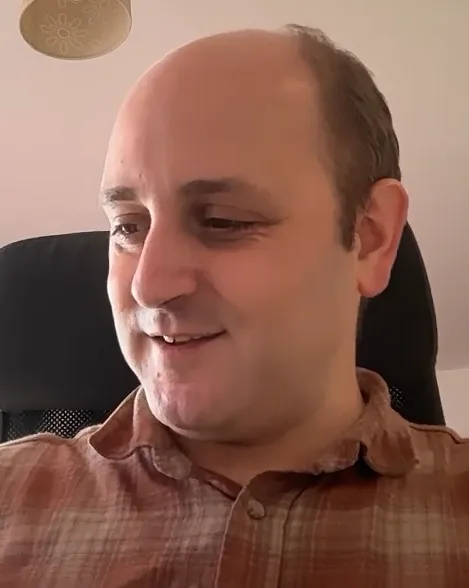
He is the official leader of Demozoo (demozoo.com) and also its co-founder. He got started in the ZX Spectrum part of the scene and is to this day releasing productions on demoparties. In 2026, he got his own "Voice of the demo scene" episode where he talks about his and Demozoo's history.
View full profile of Gasman →📡 Podcast details
Mp3 file details
 Open the waveform at full size (opens in a new tab)
- Scan status Whether the station’s analyser could read this mp3. “OK” means every number in this box was measured from the actual audio, not copied from a tag that somebody typed.
- OK
- measured from the file itself
- Scanned When the file was last analysed. If the mp3 is replaced afterwards, these numbers describe the old version until it is scanned again.
- File size How much room the mp3 takes on a disk, and how much data you use when you play or download it. It is roughly the bit rate multiplied by the length.
- 88.6 MB
- 92 930 117 bytes
- File last changed When the mp3 on our server was last written - usually the day it was uploaded, or encoded again.
- Length How long the recording plays. It is measured from the audio itself, so it is right even when a tag in the file says something else.
- 1:03:47
- hours : minutes : seconds
- Bit rate How much data is spent on each second of sound. More data keeps more detail when the audio is squeezed into an mp3: 128 kbit/s is acceptable, 192 is good, and 320 is the most an mp3 can hold.
- 194 kbit/s
- good quality
- Sample rate Digital audio is a long row of measurements of the sound wave. This is how many are taken every second. 44.1 kHz is the CD standard and 48 kHz the video and broadcast standard - both capture everything a human ear can hear.
- 44.1 kHz
- 44 100 measurements a second
- Channels How many separate signals the file holds. Mono is one. Stereo is two - left and right - which is what lets a sound be placed somewhere between your speakers.
- Stereo
- 2 channels
- Codec The method used to shrink the audio. MP3 leaves out the detail an ear is least likely to miss, which makes the file about a tenth of the size of the original recording.
- MP3
- Loudness The average loudness of the whole recording, the way a listener hears it (“integrated loudness”, in LUFS). The closer to 0, the louder. Music services aim for about -14 and podcasts for about -16, so that you do not have to reach for the volume between tracks.
- −16.3 LUFS
- typical for streaming and podcasts
- Loudness range The distance between the quiet passages and the loud ones, in LU (1 LU is 1 dB). A small number means an even, compressed sound - good in a car or on a phone. A large number means big swings between soft and loud.
- 7.5 LU
- moderate
- True peak The highest level the signal ever reaches, including the peaks that appear between the measurements when the file is turned back into sound. 0 is the ceiling: above about -1 dBTP, a recording can crackle (“clip”) on some players.
- 2.3 dBTP
- close to the ceiling - may distort on some players
- Dynamic range How far the loudest peaks stand above the loud parts of the recording, in dB - the “DR” number that music collectors compare albums by. A low number (under 8) means the sound has been squeezed until everything is equally loud: punchy, but tiring to listen to. 14 and up means the music has room to breathe, with real hits and real quiet. It says nothing about how loud the file is: turning the volume down does not change it. Chip music made of steady square waves naturally lands low.
- DR 15
- 15.5 dB · very dynamic
- Left channel level The average strength of the left channel over the whole recording (“RMS”), counted in dB below the loudest level a digital file can hold (dBFS). More negative means quieter. Compare it with the right channel.
- −19.0 dBFS
- average (RMS) over the whole file
- Right channel level The average strength of the right channel over the whole recording (“RMS”), counted in dB below the loudest level a digital file can hold (dBFS). More negative means quieter. Compare it with the left channel.
- −19.0 dBFS
- average (RMS) over the whole file
- Channel balance The left level minus the right level. Close to 0 dB means both sides are equally loud. More than about 1 dB and the whole mix leans towards one ear.
- 0.02 dB
- balanced
- Stereo width How strong the part that DIFFERS between left and right is, compared with the part they share. A very low number (-40 dB or less) means both sides carry the same sound - mono in practice. A higher number means a wider stereo picture; a very high one can sound thin on a single speaker.
- −21.8 dB
- narrow stereo
- Cover art in the file Whether a picture is stored inside the mp3 itself. A player shows it as the album art when the file is played somewhere else - in a car, on a phone, offline.
- Yes
ID3 tags Text stored inside the mp3 file itself - title, artist, album and so on. It is what a music player, a phone or a car stereo shows while it plays the file, and it travels with the file wherever it is copied.
Measured from the mp3 file on our server by the station’s own analyser. Point at a label, or select its question mark, for what the number means.
📻 Station details
Amiga demo tunes, chiptunes and dreamy synth pieces from ProTracker, FastTracker 2, Impulse Tracker and the trackers that came after. Streaming around the clock, with live broadcasts from the demoparties. Made by sceners, for the demoscene.
Comments