Podcast episode profile for 148. Utopia, the creation of a nation
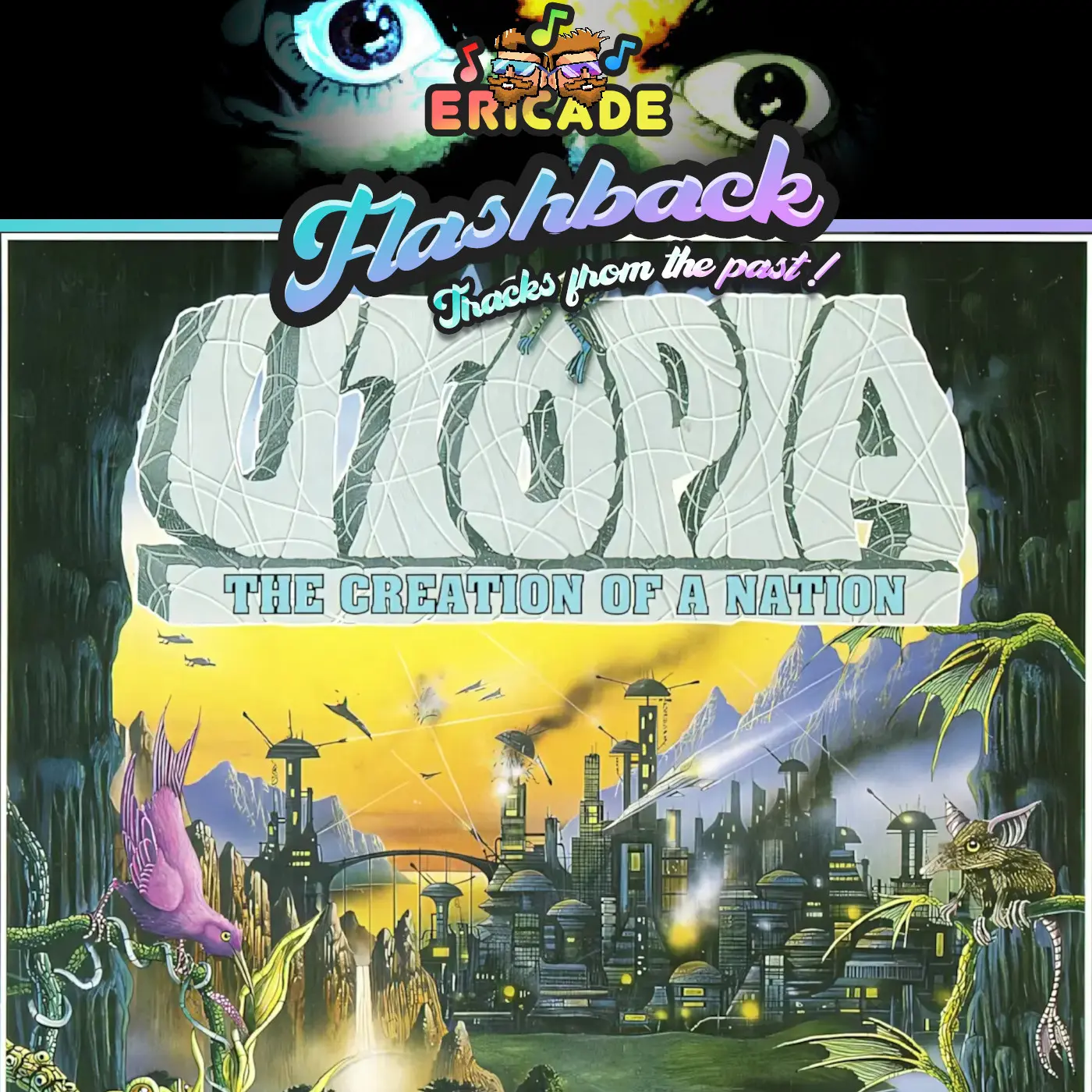
Utopia! Do you remember that old Amiga-game from the early 90s? DJ Daemon remembers the game that may have paved the way for many later real time strategy games.It was itself not an RTS, and it was by and large later forgotten until people got nostalgic. Here is the story and an hour with tracker music mostly from 2025 and 2026. A mix of the old and the new.
ericade.radio knows the chiptune and demoscene! We're the radio station playing all the best tunes from the most prominent, promising or trending artists in the scene. We also know about the artists and songs as well.
This profile was last updated on: 2026-09-23 12:00:07
🎙 Curated by DJ Daemon
View all episodes
🎙 About the podcast
Flashback, tracks from the past
We have covered the demo scene since 2020, and play all the great chip tune music as well. Join us to hear tracked music combined with commentary from the geek-of-all-trades: DJ Daemon. He was once known as Daemon in the Amigaworld, and brings you stories about Amiga, retrocomputing, C64, demos, the demo scene and all things nerdy in the retro world.
We play tracker music composed on Protracker, Screamtracker, Fasttracker and Impulsetracker. It's music composed on Amiga and the retro-PC. Genres such as Chiptune, Synthwave and Retro electro.
Track Details
- MD5
3f8ba84ee57a4d3f72fb6b939eae4814- SHA-1
97d33044a4704d2e2c41e2a8d4c93e5b5c10875b- SHA-256
5a2d3f2aa4afde6b2f4b1f98bfb96e1a87470290f1ee17e7b2b0945e0d4fd585- SHA-384
d1de2a724e7d1bdca98c06ef9e7f98f5e1d7db7a9bbaf9a3c67c3292d525d176dc41e3f78c1e6619c9eeed9d58134a58
🎤 Production Notes
Going back to producing episodes with some storytelling. You know like we used to do back in the day.Errata: the administrator is not really bald, I just remember him as such. He is pretty Picard, though.Insight: Kobayashi Maru was a scenario presented to Star Trek captain James T. Kirk. It was not winnable, but the captain hacked the simulation and won it. Utopia's counterpart does not play out that way at all. I'm just saying.Colophon: None. That's exact name of the game.
Transcript
ericade.radio - Time for Flashback, tracks from the past - today with a stories from the retro past
It's time for another retro game story. We haven't done these for years now, so it's something that has to be fixed right now. And today's game is Utopia from Gremlin Software. Time for the creation of a nation in space, because space is awesome. First out today is Barry Leitch with the intro from the game itself. Enjoy!
DJ Daemon: It's time for another retro game story. We haven't done these for years now. So, it's something that has to be fixed right now. And today's game is Utopia from Gremlin software. Time for "the creation of a nation" in space. Because space is awesome! First out today is Barry Leitch the…
Barry Leitch - Utopia tune 1
DJ Daemon: The year was 1991 when Utopia was released for the Amiga, Atari and the PC. It was a bold decision, trying to cater to the Amiga platform. In this year it was in a steady decline, and the Amiga 1200 had not even been released. But I digress… This game was not the success Gremlin had hoped…
The year was 1991 and that was when Utopia was released for the Amiga, Atari and the PC. It was a bold decision trying to cater to the Amiga platform. In this year it was in steady decline and the Amiga 1200 had not yet even been released. But I digress. This game was not the success Gremlin had hoped for, but it was remembered by several retro gamers throughout ages.I will talk more about my theories as to why it didn't succeed. But we must start with the basics. You know, the game story, the gameplay, the graphics and the sound. But first, let's go to music. Here comes Shadabim and Element Wind.
Shadabim - Element wind
DJ Daemon: Let's delve into the game itself. I played it on my Amiga in the early 90s. It starts with a nice clip show telling the story of the man who you will play as in the game. He is unable to stop an attack on his colony and finally gives this unfortunate order to abandon it and flee. But this…
Let's delve into the game itself. I played it on my Amiga in the early 90s. It starts out with a nice clip show telling you the story of the man you will play as in the game. He is unable to stop an attack on his own colony and finally gives his unfortunate order to abandon it and flee. But you see, this was only a simulation and it had no solution. He heeded Sun Tzu's 34th strategy and fled.This was the correct action and he passes the test. I guess this is how the Kobayashi Maru scenario in Star Trek was actually intended to play out by the way. And you have your Picard style administrator. Yeah, he's bald. The game starts when he's assigned the role of a colony leader on an uncharted planet. The honeymoon however is soon over as the planet has its own set of insectoids already living there.And as history has shown us so many times before, only one species will be left standing. Time for some music, it's Melodia and a study in AOX Major.
Melodia - Study in a0x major
DJ Daemon: Alright, Utopia then. It plays like a mix of Sim city and a real time strategy game. This was before that latter genre even existed. So, you have to manage the budget, the enemies, the need of the people and the QOL. QOL? Yes, the main metric is the "quality of life". It's a value that…
Alright, Utopia then. It plays like a mix of SimCity and a real time strategy game. This was before the latter genre even existed. So you have to manage the budget, the enemies, the need of the people and the QOL. QOL? Yes, that's the main metric and it's called Quality of Life.It has a value that ranges between 0 and 100 and keeping it as high as possible is imperative. If it starts sinking, your utopia becomes a dystopia. Crime rates shoot up and if it sinks low enough, someone will put a price on your head. If you fail this way, you will meet the most mild mannered assassin ever and then it's game over. So...to keep your people happy while funding your spy network and preparing for the inevitable war that the whole game will be about. Well, you build warehouses, living quarters, power plants and air bases. Also, this is not the world of today. You have to keep a balanced budget. But we have to go on with some more music here. It's Dippy and Diskmag.
Dippy - Diskmag dance (opl2 mix)
DJ Daemon: The graphics is something nice. By the standards of the day, it was a little bit stale, but have aged well in my opinion. The buildings look nice and the graphics are your typical 16bit era pixel graphics. Your council is manned by aliens and some woman that looks mostly human. It's well…
The graphics is something really nice. By the standards of the day it was a little bit stale maybe, but it has aged well in my opinion. The buildings look nice and the graphics are your typical 16-bit era pixel graphics. Your council is manned by aliens and some woman that looks mostly human. It's well drawn and gives the game a very visual appeal.The screens show statistics, so you can fix the budget, know if your people are angry, and know what needs to be built next. I have played the game on my Amiga 500, and it was showing its age already back then. But as far as I remember, it was running smoothly. And I had a final cartridge too, which meant that I could pause the game and edit the memory contents on my Amiga.I amused my little brother Philip by changing some of the game's warnings to text you know. So attacks were named Philip Attacks and he loved it. Well that's the story so far. Next up is another song, it's JustOrb and De Honingemmer.
JustOrb - De Honingemmer
DJ Daemon: The music. You know this one, it was Barry Leitch and that was the tune we started this episode with. If your pod player can handle chapters, feel free to jump back to ít and enjoy some of the best Amiga mod music there has ever been. Not to be that guy, but the music eventually becomes…
The music, you know this one, it was Barry Leitch and that was the tune we started this episode with. If your pod player can handle chapters, feel free to jump back to it and enjoy some of the best Amiga mod music there ever has been. Not to be that guy, but the music eventually becomes tedious as you only have four songs in the game. One of them is pretty nice, but in...Well, what should we say an unimaginative version of Pachelbel's "Canon in D". Where have you heard that one before? Well everywhere. There are even some rap songs using it Still until you get tired of it. It's nice to have it in the background and some music We are going on with ASIKWUSpulse summer bells in the space
ASIKWUSpulse - Summer bells (in space)
DJ Daemon: The game is funny and engaging. You must eventually go up against those pesky bugs. To quote "Ron Perlman" from some obscure game: "War… War never changes". This means first you must have your spy network reporting on what is happening and having them at peak efficiency is expensive. Then…
The game is funny and engaging. You must eventually go up against those pesky bugs. To quote Ron Perlman from some obscure game, War never changes. This means you first must have your spy network reporting on what's happening and having them at peak efficiency is expensive. Then you have to build an army. The war machine then attacks the enemies off map.and you get a report that is as detailed as your spies had the budget to do. It will take lots of time to route the enemies and they can and they will attack you, well, if you don't deal with them soon enough. We are going on with Juice and Cryptomnesia.
Juice - Cryptomnesia
Are there any bad sides to the game? Well, when the bugs have been eliminated the game goes on autopilot. It spams you with requests to fix various shortages. You must also fight the quality of life issues that pop up. Then there is not much going on.It has the same problem as SimCity did without its obvious solution. In SimCity you can always bring cool disasters to spice things up a little. Then you rebuild the damage until you get bored and bring another disaster along. I once blew up a nuclear power plant in SimCity 3000. The area was forever irradiated.Utopia does not bring any such solutions to the table. It just gets tedious all the time. And when you played all maps with different bug enemies, it does not offer that much of replay value. But in small doses, this game offers many hours of great nation building. Well, time to go on with Fear of Dark and Labrat funk.
DJ Daemon: Are there any bad sides to the game? Well… When the bugs have been eliminated, the game goes on autopilot. It spams you with requests to fix various shortages. You also must fight the quality of life issues that popup. The there is not much going on. It has the same problem as Sim City…
Fear of dark - Labrat funk (Mesdup)
DJ Daemon: So why didn't it become a classic and legendary game? Here is my take of it: it was released before RTS was a thing. RTS stands for "Real time strategy". And Utopia plays as "Prototype" for such a game. Games like Dune, Red alert and Command and Conquer gained popularity soon after and…
Why didn't it become a classic and a legendary game? Well, the reviews were raving and a lot of people liked the game. But here's my take of it. It was released before RTS was a thing. RTS stands for Real Time Strategy and Utopia plays like a prototype for such a game. Games like Dune 2, Red Alert and Command and Conquergained popularity soon after and prospered in the time span between the mid 90s and mid noughties. It was also released to PC but did not seem to have that much of big impact. A sequel was released but I don't know much about it. The Amiga went away in 1994 so it was in a steady decline even back then. There were not much you could do to save it.Also, well, it kind of didn't really look like games like SimCity or Civilization. It was a novel idea that went under as it failed to be interesting in the long run. But for me it was easy. I loved the game. It was exactly my kind of game with a mix of management, strategy and a real time war. It may not have been a game that stood the test of time, but it kind of...built a legacy of its own. Music you say? Yes, let's listen to Shatty, a theme from Simon Belmont.
Shatty - Theme of Simon Belmont
DJ Daemon tells you that most of the music was made in 2025 and 2026.
It's time to say goodbye for now. We'll be back in a week. You're listening to flashback tracks from the past and I'm DJ Daemon. Most of the music you heard today was from 2025 and some of it was also from 2026. We are going on with Fear of Dark Hell freezes over.
Fear of dark - Hell freezes over
DJ Daemon leads you into the good night with the last song.
Leading you into that good night is the last song of the episode. That would be Nikku4211 and Aquatic ambience. See you in a week and remember that we are available on Ericade.Radio.
Nikku4211 - Aquatic ambience
Equipment
Neumann U87
UAD "Limiter"
Thimeo Stereo tool in bypass.
Target LUFS: -15.
🏷 Storytelling
Episodes built around a specific story or piece of history — from the demoscene, retro computing, or the station itself.
🏷 Retro gaming
Flashback episodes covering classic and retro video games, from the 8-bit era onward.
Play History
- 🕘 2026-09-22 14:00:06
- 🕘 2026-09-16 22:00:06
- 🕘 2026-09-12 04:00:03
About the artist Flashback View all tracks ›
"Flashback, tracks from the past" is the current name of the podcast. Now with tracked music from nearly all platforms (including Amiga, Atari, PC). We also speak about the retro past, present the artists, talk about old games and review demo parties.
🎧 31,388 plays on ericade.radio
🎙 People in this podcast episode
He got his Commodore 64 in 1989 and his first Amiga in 1990. A huge fan of tracker music and have had a long standing dream to create a radio show playing that kind of music. In 2020, that dream came true and in december Amiga Flashback started as a podcast. It was later renamed Flashback, tracks from the past and here we are.
He is also an orga for Swedish demo party Edison and a total retro nerd.
📡 Podcast details
Mp3 file details
 Open the waveform at full size (opens in a new tab)
- Scan status Whether the station’s analyser could read this mp3. “OK” means every number in this box was measured from the actual audio, not copied from a tag that somebody typed.
- OK
- measured from the file itself
- Scanned When the file was last analysed. If the mp3 is replaced afterwards, these numbers describe the old version until it is scanned again.
- File size How much room the mp3 takes on a disk, and how much data you use when you play or download it. It is roughly the bit rate multiplied by the length.
- 85.2 MB
- 89 290 008 bytes
- File last changed When the mp3 on our server was last written - usually the day it was uploaded, or encoded again.
- Length How long the recording plays. It is measured from the audio itself, so it is right even when a tag in the file says something else.
- 1:01:37
- hours : minutes : seconds
- Bit rate How much data is spent on each second of sound. More data keeps more detail when the audio is squeezed into an mp3: 128 kbit/s is acceptable, 192 is good, and 320 is the most an mp3 can hold.
- 193 kbit/s
- good quality
- Sample rate Digital audio is a long row of measurements of the sound wave. This is how many are taken every second. 44.1 kHz is the CD standard and 48 kHz the video and broadcast standard - both capture everything a human ear can hear.
- 44.1 kHz
- 44 100 measurements a second
- Channels How many separate signals the file holds. Mono is one. Stereo is two - left and right - which is what lets a sound be placed somewhere between your speakers.
- Stereo
- 2 channels
- Codec The method used to shrink the audio. MP3 leaves out the detail an ear is least likely to miss, which makes the file about a tenth of the size of the original recording.
- MP3
- Loudness The average loudness of the whole recording, the way a listener hears it (“integrated loudness”, in LUFS). The closer to 0, the louder. Music services aim for about -14 and podcasts for about -16, so that you do not have to reach for the volume between tracks.
- −15.7 LUFS
- typical for streaming and podcasts
- Loudness range The distance between the quiet passages and the loud ones, in LU (1 LU is 1 dB). A small number means an even, compressed sound - good in a car or on a phone. A large number means big swings between soft and loud.
- 7.0 LU
- moderate
- True peak The highest level the signal ever reaches, including the peaks that appear between the measurements when the file is turned back into sound. 0 is the ceiling: above about -1 dBTP, a recording can crackle (“clip”) on some players.
- 0.5 dBTP
- close to the ceiling - may distort on some players
- Dynamic range How far the loudest peaks stand above the loud parts of the recording, in dB - the “DR” number that music collectors compare albums by. A low number (under 8) means the sound has been squeezed until everything is equally loud: punchy, but tiring to listen to. 14 and up means the music has room to breathe, with real hits and real quiet. It says nothing about how loud the file is: turning the volume down does not change it. Chip music made of steady square waves naturally lands low.
- DR 12
- 11.6 dB · moderately dynamic
- Left channel level The average strength of the left channel over the whole recording (“RMS”), counted in dB below the loudest level a digital file can hold (dBFS). More negative means quieter. Compare it with the right channel.
- −17.4 dBFS
- average (RMS) over the whole file
- Right channel level The average strength of the right channel over the whole recording (“RMS”), counted in dB below the loudest level a digital file can hold (dBFS). More negative means quieter. Compare it with the left channel.
- −17.4 dBFS
- average (RMS) over the whole file
- Channel balance The left level minus the right level. Close to 0 dB means both sides are equally loud. More than about 1 dB and the whole mix leans towards one ear.
- 0.02 dB
- balanced
- Stereo width How strong the part that DIFFERS between left and right is, compared with the part they share. A very low number (-40 dB or less) means both sides carry the same sound - mono in practice. A higher number means a wider stereo picture; a very high one can sound thin on a single speaker.
- −21.3 dB
- narrow stereo
- Cover art in the file Whether a picture is stored inside the mp3 itself. A player shows it as the album art when the file is played somewhere else - in a car, on a phone, offline.
- Yes
ID3 tags Text stored inside the mp3 file itself - title, artist, album and so on. It is what a music player, a phone or a car stereo shows while it plays the file, and it travels with the file wherever it is copied.
Measured from the mp3 file on our server by the station’s own analyser. Point at a label, or select its question mark, for what the number means.
📻 Station details
The home of retro computing and retro gaming music. Streaming 24/7 with shows and podcasts about retro computing, retro gaming, demo scene and all things nerdy in the retro world.
Comments