Podcast episode profile for 47. The basics of the home computer revolution
ericade.radio knows the chiptune and demoscene! We're the radio station playing all the best tunes from the most prominent, promising or trending artists in the scene. We also know about the artists and songs as well.
🎙 About the podcast
Flashback, tracks from the past
We have covered the demo scene since 2020, and play all the great chip tune music as well. Join us to hear tracked music combined with commentary from the geek-of-all-trades: DJ Daemon. He was once known once a Daemon in the Amigaworld, and brings you stories about Amiga, retrocomputing, C64, demos, the demo scene and all things nerdy in the retro world.
We play tracker music composed on Protracker, Screamtracker, Fasttracker and Impulsetracker. It's music composed on Amiga and the retro-PC. Genres such as Chiptune, Synthwave and Retro electro.
Track Details
🎙 Listen to Episode
47. The basics of the home computer revolution
Flashback, tracks from the past
🎧 Playlist
- 00:00 Flashback – tracks from the past – Show intro
- 00:10 DJ Daemon: “We need to build computers for the masses, not the classes”. With those immortal words, Commodore’s CEO Jack Tramiel, threw his hat in the ring. In the early 80s, many companies knew that soon enough, everyone would sit a home programming in Basic and the world will change. It’s not exactly what ended up happening, but it was quite a ride. Today we’ll discuss the home computing and the Basic era seen from a Swedish perspective.
- 00:45 Poi5oN – For All We Know
- 04:55 DJ Daemon: The text says, “Land on Jupiter with the people’s computer VIC-20”. You may be excused if you believe those words came from the Soviet Union or Red China, but no… It was written in Swedish in an advert from Handic. The VIC-20 was meant to be the computer dad used to calculate with spreadsheets, mom stored her cookie recipes, and the kids play games on. And it kinda went a bit like that in the beginning. But it was expensive here in Sweden! Prices from various sources, adjusted for inflation and converted to today’s dollar value says it all. In 1983, a Texas Instruments 99 with 16K RAM cost about 750 dollars, and Spectrum 48K set you back 900 dollars and a VIC-20 also 750 dollars.
- 05:57 Alex Menchi – Metamorphose
- 09:51 DJ Daemon: Among my stuff, I found a diskette for my old C64. It had a lot of Swedish software developer “Grana Software’s” programs. Those were trivial tax calculators, databases, and other software that pretty much anyone could cobble together. Amazingly enough, they were written in Basic, which meant you could read the code and edit it. It also made it impossible to stop anyone from copying it. Despite this they were able to sell this software for several years during the 8-bit era.
- 10:30 V.E.M – Irrespective of Age
- 17:22 DJ Daemon: So, Basic. A much-maligned programming language that just had to be included in all home computers during the first years in the 80s. What it lacked in speed, finesse, and capability, it made up for in ease to use. Anyone could learn to build programs and very limited games with it. The Commodore 64 had a primitive Basic from Microsoft. Yes! That Microsoft. It lacked most advanced functions. You had to write directly into the memory addresses to change a lot of stuff. The cool kids learned to write superior programs in assembly language and thus “talking directly to the computer’s processors”.
- 18:12 Jiyoshi – Having a Blast!
- 20:34 DJ Daemon: My father bought a Texas Instruments TI99 home computer. It was very advanced for its time and partially 16-bit in an era where the others just had 8 bits. It came with a decent Basic that could be improved with the “TI Extended basic” module, that you plugged into the computer like a Nintendo game cartridge. It was a more… hehum… advanced basic, if I may use that oxymoron… And it pretty much made it possible to work with graphics and sound. My father built a Donkey Kong clone for me and a birthday program with a song from the smurfs.
- 21:22 Kevin Chow – The Epic
- 26:15 DJ Daemon: Basic seemed to be the future, but it was just not meant to be. The first Amiga that came out in 1985 had a properly branded version from Microsoft, that shipped with the operating system. Even my Amiga 500 came with it on Workbench 1.3. I hated it, as it was slow as morass. It was performing worse in some instances than my Commodore 64 basic. But when languages such as Pascal, C and assembly language got more popular, it made Basic obsolete by the end of the 80s.
- 26:59 Aceman – Cold Smoke
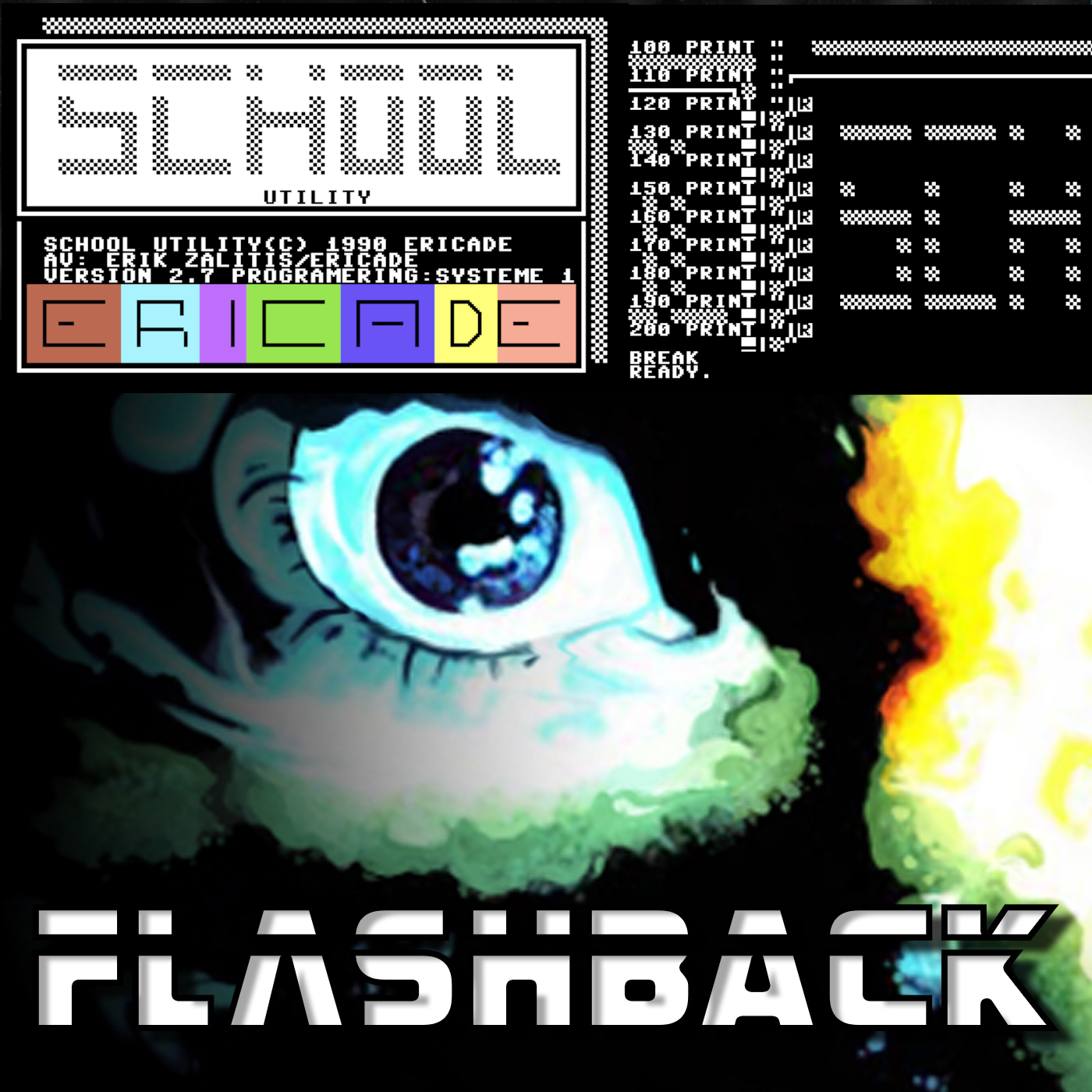
- 30:09 DJ Daemon: My first program in C64 basic was a School Utility, called… drumroll… School Utility. It featured a primitive calendar, a task list, and the possibility to store, edit, view and print a school schedule. I smile every time I load it into my C64 and see just how serious I was in creating it. I had my own “company” called ERICADE and called myself Steelpulse and Systeme 1. Not entirely sure why. That disappeared swiftly, but ERICADE seems to follow me around. And later I took the name Daemon.
- 30:53 Algar – They gave me my life back
- 34:59 DJ Daemon: As computers got more advanced, operating systems began loading from diskettes and later hard drives. And in that era. As I previously said, better programming options came available. And if you didn’t like them, you could get your own. In the days of the C64, “Simons basic” was one of the few upgrades available for those still wanting to do Basic. I got Pascal for my Amiga and later learned the scripting language Arexx, which still makes me happy when I think about it. Maybe nothing today, but back then, I could automate everything. I wrote loads of scripts for my BBS.
- 35:45 SofT MANiAC – Dance with me
- 38:25 DJ Daemon: When did the home computer era die? The way I see it, and this I’ve said in previous episodes, it was in the 90s as the PC and Mac could play all the cool games and give you access to all the useful business software. At that time, there were no place for a dedicated “at home computer”. When did Basic die? As I just said, it could really compete when it wasn’t delivering on a chip inside the computer. It’s really that simple. Basic stands for “Beginners’ All-purpose Symbolic Instruction Code”. Yeah, maybe I should have started by saying that.
- 39:09 DRAX of MoN – Boat on the road
- 43:04 DJ Daemon: Boat on the road. How does that even work? What about the Névoke demo party? No tracked music compos.
- 43:44 Ben-Jam – Heaven watching us
- 47:26 DJ Daemon: New jingles.
- 47:58 Grubi of Brs – Beans and Rusk
- 53:27 DJ Daemon: summary.
- 53:58 Hunz – I am way one son
- 58:02 DJ Daemon: Leading you into the good night. Jesper Kyd.
- 58:28 Jesper Kyd – Space song
🎤 Production Notes
I have long wanted to talk about how Basic was to be the start of a revolution and how it kinda started a revolution it wasn't really to be a big part of. It was a cool story and I ended up telling it pretty well.Colophon:Right, it's just a word play. Basic and basics of... Sometimes Basics and fundamentals can be used interchangedy. So can Basic and "crappy programming language".
📝 Transcript
Time for another episode of Flashback. Tracks from the past. The Eric Hayes Radio Network. We need to build computers for the masses, not the classes. With those immortal words, Commodore's CEO Jack Tramiel threw his hat in the ring. In the early 80s, many companies knew that soon enough, everyone would sit at home programming in BASIC.and the world, it would change. It is however not exactly what ended up happening, but it was quite a ride. Today we'll discuss the home computing and basic era seen from a Swedish perspective.
Poison for all we know. The Texas land on Jupiter with the people's computer, Vic-20. You may be excused if you believe those words came from the Soviet Union or Red China, but no, it was written in Swedish in an advert from Handic. The Vic-20 was meant to be the computer dad used to calculate the spreadsheets. Mom stored her cookie recipes.and the kids played games on. And it kinda went a bit like that in the beginning. But it was expensive here in Sweden. Prices from various sources, adjusted for inflation and converted to today's dollar value says it all. In 1983, a Texas Instrument 99 with 16K of RAM cost about $750 and a Spectrum 48K set you back $900.And finally a Vic 20 also $750.
Alex Menke Metaformas Among my stuff I founded this get for my old C64. It had a lot of programs from Swedish software developer Grana Software. Those were trivial text calculators, databases and other software that pretty much anyone could cobble together. Amazingly enough they were written in BASIC which meant that you could read the code and edit it.It also made it impossible to stop anyone from copying it. Despite this, they were able to sell this software for several years during the 8-bit era.
VAM irrespective of age. So basic. A much maligned programming language that just had to be included in all home computers during the first years of the 80s. While it lacked in speed, finesse and capability, it more than made up for when it came to ease of use. Anyone could learn to build programs and very limited games with it.The Commodore 64 had a primitive basic from Microsoft. Yeah, that Microsoft. It lacked most advanced functions. You had to write directly into the memory addresses to change a lot of stuff. The cool kids learned to write superior programs in assembly language and thus talking directly to the computer's processors.
Yoshi having a blast. My father, he bought a Texas instrument TI-99 home computer and was very advanced for its time and age and partially a 16-bit machine in an era where the others just had 8 bits. It came with a decent basic that could be improved if you bought and installed the TI Extended Basic Module.It was something you plugged into the computer like a Nintendo game cartridge. It was more... advanced basic, if I may use that oxymoron. And it pretty much made it possible to work with graphics and sound. My father built a Donkey Kong clone for me and a birthday program with a song from the Smurfs.
Kevin Chao, the epic. Basic seemed to be the future, but it just wasn't meant to be. The first Amiga that came out in 1985 had a properly branded version from Microsoft that shipped with operating system. Even my Amiga 500 came with it on Workbench 1.3 and I hated it. It was slow as morass.it was actually performing worse in some instances than my Commodore 64 Basic. But when languages such as Pascal, C and assembly language got more popular, it made Basic obsolete. And that happened by the end of the 80s.
Aceman Cold Smoke. My first program in the C64 Basic was a school utility called Drumroll School Utility. It featured a primitive calendar, a task list and the possibility to store, edit, view and print a school schedule. I smile every time I load it into my C64 and I do it just to see how serious I was about it when I created it.I had my own company called Erricade and I called myself Steel Pulse or System One. Not entirely sure as to why. That disappeared swiftly, but Erricade seems to be following me around.
they gave me my life back. As computers got more advanced, operating systems began loading from diskettes and later hard drives. And in that era, as I previously said, better programming options came available. And if you didn't like them, you could get your own. In the days of the C64, Simon's Basic was one of the few upgrades available for those still wanting to do Basic.I got Pascal from my Amiga, and later I learned the scripting language RX. Amiga rex that is. It still makes me happy to think about it. Maybe nothing today, but back then I could automate everything. I wrote loads of scripts for my BBS.
Soft Maniac dance with me. So when did home computer era end? The way I see it, and this is something I said previously, it was in the 90s as the PC and Mac could play all the cool games and give you access to all the useful business software. At that time there were no plays for a dedicated at home computer. When did BASIC die? As I said,It really couldn't compete when it wasn't delivered on a chip inside a computer. It's really that simple. BASIC stands for Beginner's All-Purpose Symbolic Instruction Code. Yeah, maybe I should've started by saying that first.
of Mon, boat on the road. I don't know how that works, cause I think they actually need Z to function. Maybe they are carrying it on a transport or something. When it comes to demo parties, well today it's the 14th of August as I'm broadcasting here. And Nevoq, or Nevoke, or...I don't know how to translate it, it's a demo party that's running right now. Alas, it doesn't seem to have much of tracker competition, so I'm sorry I will not be able to get anything out of it. And other demo parties coming up? Yeah, well, it's scarce. But we'll see what we can do.
Bernie Jam, heaven watching us. If you're listening to the radio station, you probably already know that we have a new package of jingles. That's the messages in between the songs. And we are using them only when I'm broadcasting live.
of BRS, Beans and Rusk. I have no idea what Rusk is. It doesn't seem like something you want in your tea. At any rate, this is the Ericade Radio Network and flashback tracks from the past and we have been discussing basic and home computer era. Yeah, thanks for listening and next week, new topic, new music and everything. Go to Ericade.radio.get their latest schedules and everything else.
Hans really destroys the English language. Like me, basically. I am Way One Son. It sounds like Chinese. I don't know why. Anyway, this is DJ D-Bone, or my real name is Eric, and I thank you for listening and hope you will be back next week. And we are leading you out into the good night with Jasper, Tjyd and Space Song.
Play History
- 🕘 2026-06-05 04:00:06
- 🕘 2026-05-30 11:00:06
- 🕘 2026-05-25 14:00:06
About the artist Flashback View all tracks ›
"Flashback, tracks from the past" is the current name of the podcast. Now with tracked music from nearly all platforms (including Amiga, Atari, PC). We also speak about the retro past, present the artists, talk about old games and review demo parties.
🎧 29,167 plays on ericade.radio
🎙 The people behind the podcast
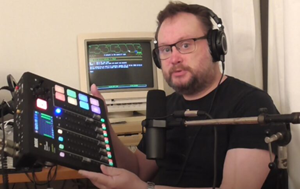
He got his Commodore 64 in 1989 and his first Amiga in 1990. A huge fan of tracker music and have had a long standing dream to create a radio show playing that kind of music. In 2020, that dream came true and in december Amiga Flashback started as a podcast. It was later renamed Flashback, tracks from the past and here we are.
He is also an orga for Swedish demo party Edison and a total retro nerd.
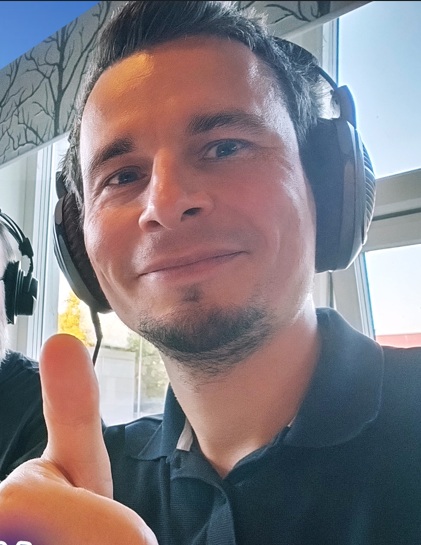
He was actually a listener from the time of the first ericade-station in the 00s. He came back as a listener in 2020, when the station restarted. Later he voluntered to build the new website of the station and also joined as a cohost of the podcast. He runs his own site called the Retro spirit.

Fellow retro geek and creator of great music on his daw.
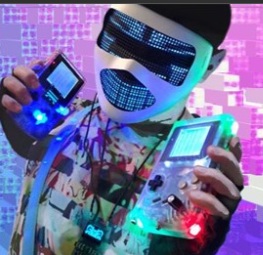
He describes himself like this: "Pure 8-bit chiptunes! All Tekmann music are solely made on Gameboy units modded to perfection... No computer producing just pure chiptune bliss ;)".

A true retro geek and sysop from the 90s. He lives with his family in Sweden and enjoys sharing his passion for retro computing and music. He is sysop for Swedish BBS "This old cabin".

Created a report about Impulsetracker for us in 2022. Also voiced our messages for christmas 2022 in co-operation with the Retro spirit.
📡 Podcast details
📻 Station details
The home of retro computing and retro gaming music. Streaming 24/7 with shows and podcasts about retro computing, retro gaming, demo scene and all things nerdy in the retro world.